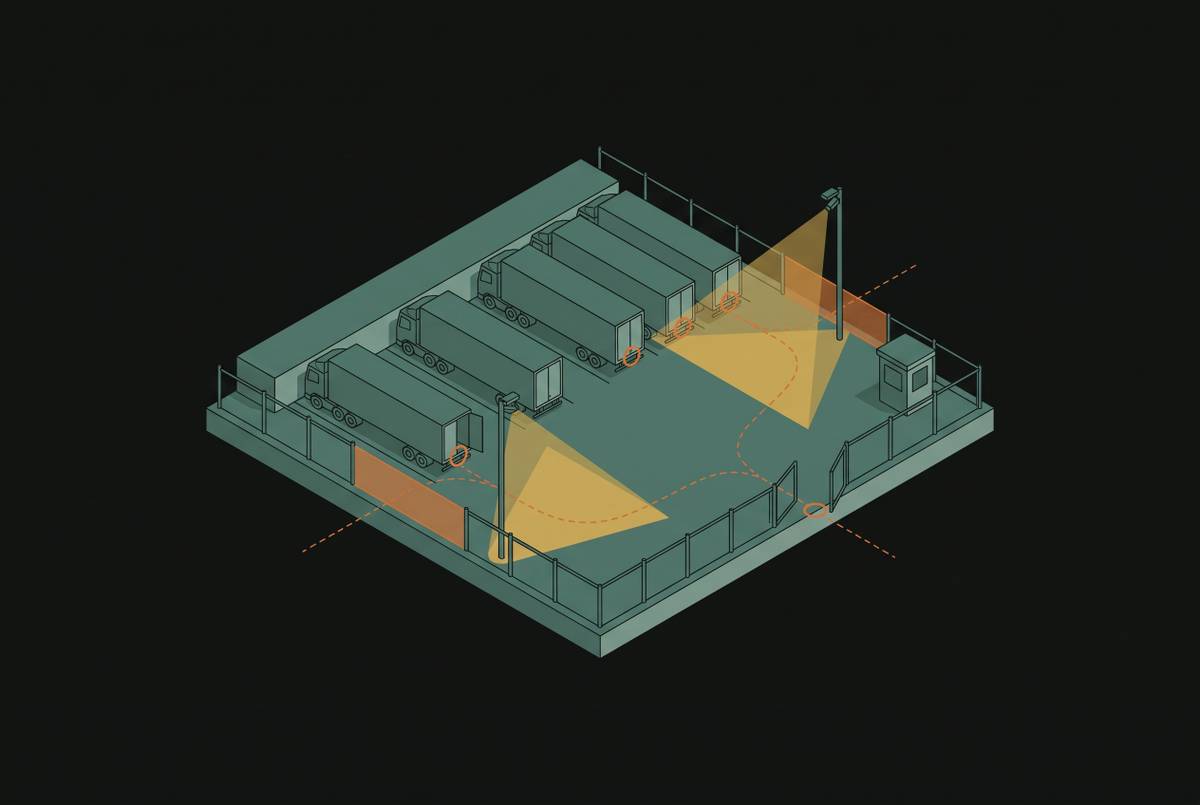
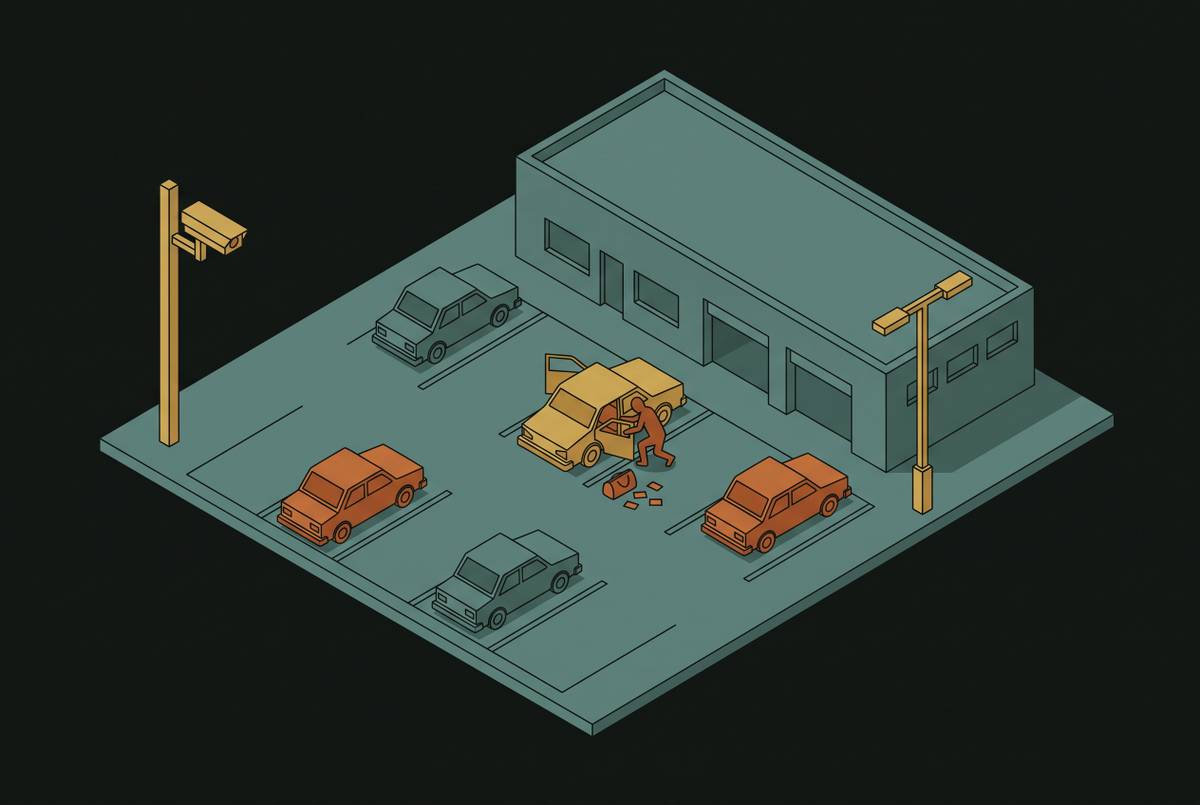
The Threat Capability Gap Between Generic Monitoring Platforms and Freight Yard Reality
Generic monitoring sees yard motion but misses theft hiding in routine.
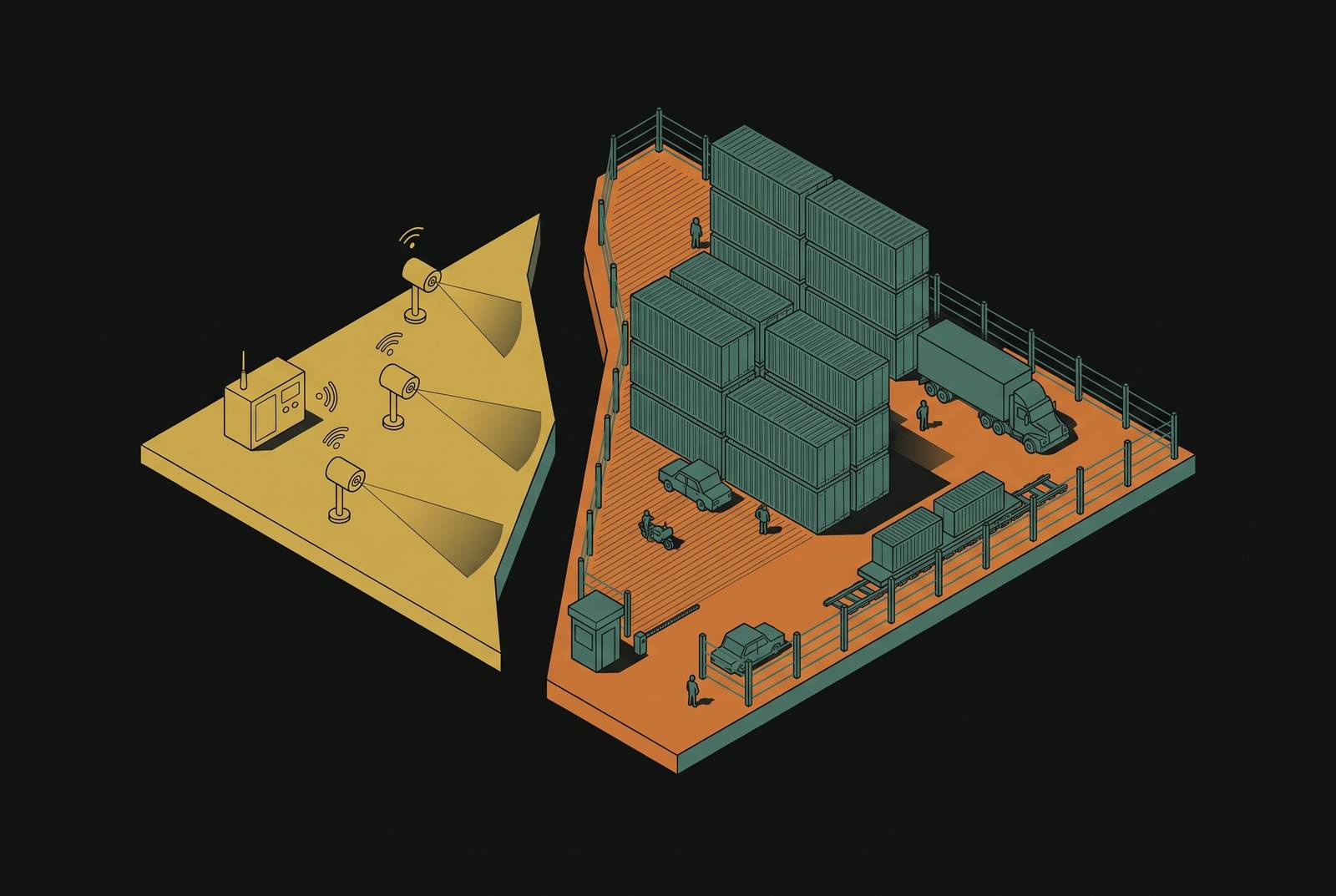
AI-augmented remote video monitoring for truck yards and freight facilities must do more than detect movement: it must tell legitimate yard activity from theft in progress. The threat capability gap between generic monitoring platforms and freight yard reality is a gap in context, identity and continuity. Closing it takes yard-specific behavioral logic, operational data and situational memory, along with trained human operators who handle events when the facts are unclear or the stakes are high.
Why freight yards generate a threat profile that generic monitoring was never designed to read
A loaded trailer can sit in an open lot through the overnight stillness while tractors enter, drivers walk trailer rows and routine movements continue elsewhere in the yard. The perimeter must admit vehicles for the facility to function. A truck approaching a staged load is therefore not inherently suspicious, and a trailer leaving is not inherently evidence of theft. Those familiar actions become a security concern when someone uses them for an unauthorized purpose.
The asset itself gives no warning by remaining parked. It becomes part of an incident when someone accesses or moves it, yet those actions look much like authorized work to a camera detecting motion or presence. Organized groups exploit that resemblance through after-hours access, identity deception and intrusions spread across several visits. A monitoring system must establish whether the activity belongs at that trailer, at that time and under those credentials, rather than treating movement as sufficient evidence either of normal work or of a threat.
How the cargo theft threat shifted from opportunistic to organized and yard-centric
The image of a hijacked truck on an isolated highway does not explain the organized theft methods now directed at freight facilities. Criminal groups use load boards, gaps in broker authentication and after-hours yard access to take high-value freight without violence. The carrier may not discover the theft until a delivery is missed. In these cases, the intrusion begins before a truck reaches the gate. They prepare to get in by finding weaknesses in the checks that make a pickup look legitimate.
Munich Re's Cargo Theft Tactics and Trend Report 2025 reports that thieves increasingly rely on identity deception and fraudulent pickups, using falsified documents or stolen credentials to get into secure facilities. Fictitious pickup, double brokering and phantom carrier fraud exploit weaknesses in credentialing. Paperwork can look correct on the surface. Consequently, a camera may record an apparently orderly transaction while the authorization behind it is false. Physical surveillance cannot tell whether that authorization is valid from vehicle presence alone.
Drop-and-hook operations give these groups time to prepare. A loaded trailer dropped Friday evening may remain until Monday, leaving an extended access window for an attacker who already knows its contents. Reconnaissance can include studying schedules, watching shift changes and finding camera blind spots before choosing when to enter. CargoNet's 2025 annual analysis found that confirmed cargo theft incidents rose and the average value of each theft climbed sharply. Against that loss pattern, the operational concern is deliberate target selection rather than indiscriminate entry, which makes the planning activity before a pickup more important to detection.
What generic alarm-relay monitoring was actually designed to do, and why freight yards fall outside that design
Traditional alarm monitoring follows a relay model in which a sensor trips, a signal reaches a central station, an operator calls the premises and police are dispatched. That sequence handles a specific alarm event tied to an asset inside a building. Its central question is straightforward. Once a signal arrives, how quickly does the response proceed? The model does not depend on establishing whether a series of otherwise ordinary activities amounts to a developing theft.
Generic video monitoring adds images but may still follow that same logic. A presence detection produces a clip, and the clip enters a queue for human review. In a freight yard, truck arrivals, yard tractor movements and drivers walking between trailers can all feed that queue. An operator receiving those clips still needs information the images do not supply, including whether a pickup is expected and whether the carrier's credentials are legitimate.
This is a mismatch of design and task. A building-interior alarm can treat presence as an exception under conditions where a freight yard must accommodate it continuously. The yard also distributes its assets across an outdoor area rather than enclosing them behind a single meaningful alarm boundary. More cameras may expand the view, but they do not by themselves connect an arrival to a schedule or a driver to valid authorization. Faster handling of a presence alert therefore cannot substitute for detecting the operational inconsistency that makes the event suspicious.
The yard-specific behaviors that look routine to a generic platform but are operationally significant
At 2 AM, a tractor enters a yard for what appears to be a drop-and-hook. A motion-triggered camera records a scheduled driver's arrival and a fraudulent carrier's arrival alike. The hour alone does not settle the question. Without a cross-reference to expected delivery windows or carrier credentials, the event may generate no alert or the same alert as routine traffic. Its significance depends on whether this arrival fits the facility's actual work.
The same ambiguity follows a person or vehicle lingering beside a loaded trailer. Extended time near the asset may be reconnaissance before a fictitious pickup, but it can also resemble a driver checking a load or an employee walking the yard. Duration changes the question without answering it. A presence-only platform identifies the object near the trailer while leaving the purpose unresolved. The useful distinction lies in how that activity fits normal operations and whether it connects to other events at the site.
Reconnaissance need not wait until the yard is quiet. During daylight business hours, organized groups can study which trailers hold high-value commodities while their movements blend into normal traffic. A platform that treats business-hour presence as routine can overlook the preparation for a later theft. The gate transaction can be equally unremarkable. A truck arrives, paperwork changes hands and a trailer leaves, but fraudulent credentials make this ordinary-looking pickup a theft.
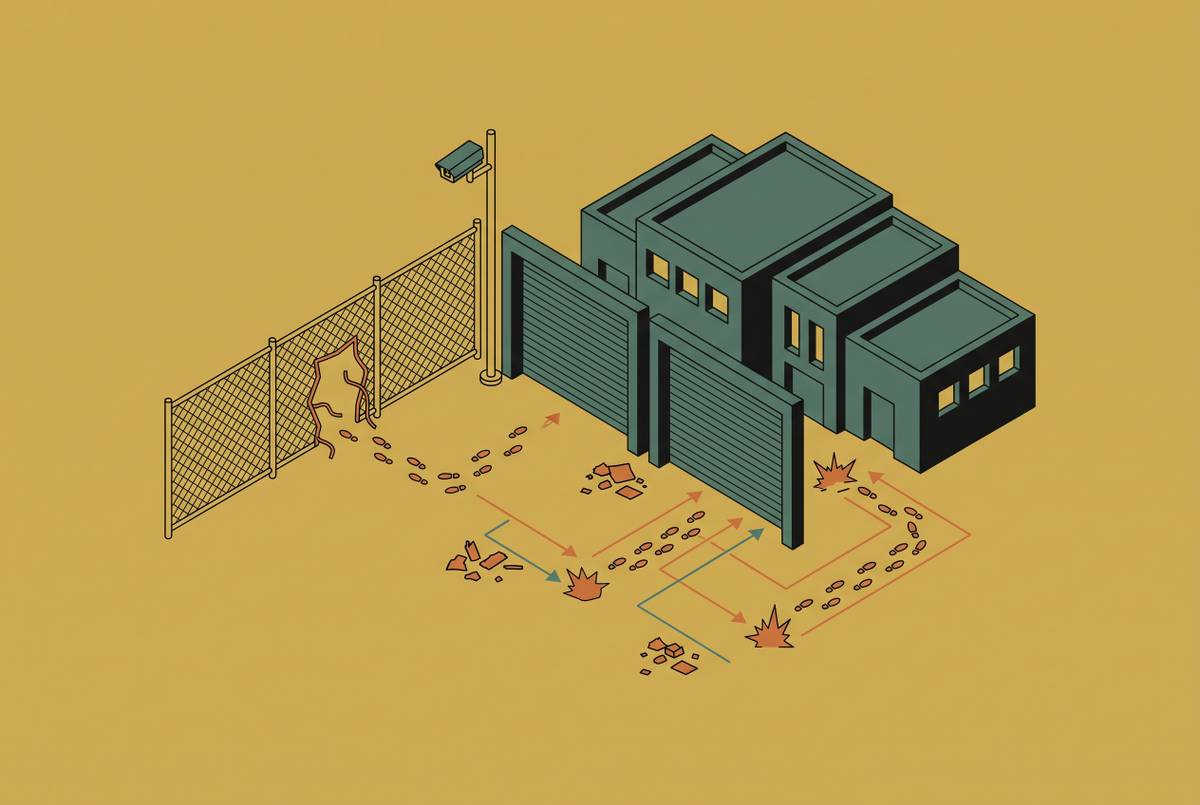
A group may probe the yard on one visit, return to stage access on another and execute the theft on a third. Reviewed independently, each clip can appear inconclusive or routine because the other parts of the sequence are absent. The sequence is the evidence that needs interpretation. A platform that has no memory of earlier activity at the site cannot link the planning to the theft, even when cameras recorded parts of both.
Why low-light conditions and outdoor scale make the detection gap worse in practice
Overnight and early morning operations place the behavioral problem inside a difficult imaging environment. Generic AI video analytics trained on controlled or indoor footage do not generalize well to IR-switched grayscale, rain, fog or shifting light from truck headlights. Trailer rows also obscure people and vehicles. These conditions affect the basic classifications on which more advanced interpretation depends. A system trying to assess suspicious access must first retain a useful view of the person or vehicle involved.
Sensors that provide coverage in complete darkness can produce blurry images and false alarms in adverse weather. At 3 AM, uncertainty over whether a shape is a person or a shadow can make coverage operationally unhelpful during a high-risk period. Scale adds another difficulty when a person or vehicle disappears behind a row of trailers. A generic platform may fail to work out where it went or flag the gap it left in coverage.
The lesson for buyers is to evaluate models on footage from the actual site, including night/IR conditions, weather and the yard's geometry. Demonstrations with controlled lighting do not show how well the system works under those conditions. Field validation must address missed threats as well as false positives, because either can undermine monitoring. A false negative leaves the relevant event undetected, while a queue-clogging false positive rate can lead operators to mute cameras. Accepting laboratory claims without that validation can leave the weakness undiscovered until footage is examined after a loss.
What should AI-augmented remote video monitoring do differently at freight yards?
Closing the capability gap takes monitoring logic built around how the facility works. Expected truck arrival times, legitimate credentials and routine loading and unloading activity provide the baseline against which access becomes significant. Traffic volume alone is not the measure. The platform must distinguish suspicious deviations from ordinary work without creating an alert queue that buries real threats. That requirement changes the task from relaying detections to interpreting activity in context.
At the gate, identity-aware monitoring requires more than a camera feed. Integration with dispatch and scheduling data allows the system to cross-reference a vehicle arrival against expected pickups and flag activity outside the expected window. The schedule supplies context that the image lacks. Credential legitimacy must also be part of that assessment, because an apparently routine exchange does not establish authorization. This approach addresses the access gap exploited by fraudulent presentations rather than assuming that a visible pickup is a valid one.
Across the yard, persistent situational awareness must connect events separated by time. A loitering event on Tuesday, a gate probe on Wednesday and an after-hours trailer departure on Saturday need to be assessed as a possible sequence. That connection requires memory of prior activity at the site. The monitoring logic retains enough context for the combined pattern to receive scrutiny when isolated events would not, while criminal intent remains unproven by repeated visits alone.
AI-native triage then determines which activity requires human judgment. Agentic automation should handle routine checks, including whether an arrival falls within expected parameters and whether a person in the yard is a known employee. Ambiguous and high-stakes events belong with trained human operators. The purpose is to route unresolved risk to someone who can act within the available response window. An AI-native service pairing that automation with trained operators fits the yard's volume only if it preserves coverage during peak-risk hours without relying on muted cameras or overage fees.
What the Q2 2026 data signals about where the threat is heading and why the window for closing the gap is narrowing
CargoNet's Q2 2026 analysis reported fewer recorded incidents, but estimated losses rose sharply, and among thefts with a reported commodity value, the average value reached into six figures. The decline in incident counts is not, by itself, evidence of reduced financial exposure. The loss trend points the other way. It is consistent with groups selecting fewer, more valuable loads that justify the preparation required for a targeted theft. Facilities weighing their monitoring needs must consider how much a successful theft could cost as well as how many events are recorded.
That selection places greater pressure on prevention before departure. A group capable of identifying valuable freight, arranging a fraudulent pickup and conducting multi-visit reconnaissance is not meaningfully addressed by a fence sign, a dummy camera or an alert generated after the trailer has left. Federal efforts to coordinate action against organized theft rings that cross jurisdictions focus on enforcement after the theft. They do not prevent Saturday-night yard access. Operators cannot treat that response as a substitute for recognizing the activity while there is still an opportunity to intervene.
The operational imperative is to assess current monitoring against the behaviors that precede and enable removal. Would it cross-reference the 2 AM arrival with the expected pickup, distinguish unresolved credential risk and connect the departure to earlier reconnaissance? A recorded clip does not answer those questions. As target selection becomes more precise, leaving them unresolved exposes the facility to a substantial operational cost from a single event.