Vandalism and Trespassing Escalation Patterns at Industrial Sites
Early breaches signal weak guardianship and invite organized repeat targeting.
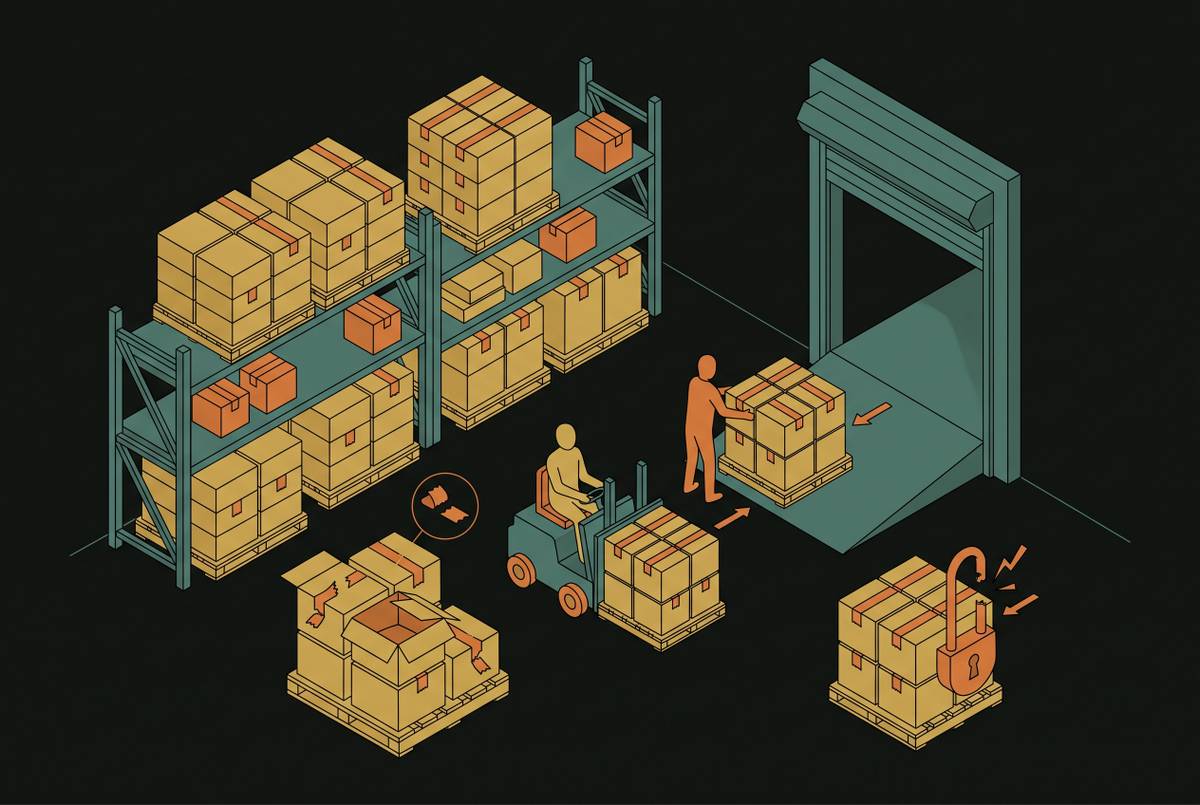
Industrial and logistics properties invite escalating criminal attention because of how they are built and run, not because of any single lapse in judgment by the people who manage them. The exposure starts outdoors. Trailers, vehicles, equipment, raw materials, and finished product sit outside overnight as a matter of routine. Loading areas stay active after the day shift ends, and the perimeter fencing that's meant to hold a line often runs for stretches that see no foot traffic at all for hours at a time. None of this is an oversight. It's how these properties have to operate to move goods, store materials, and keep equipment where workers can reach it.
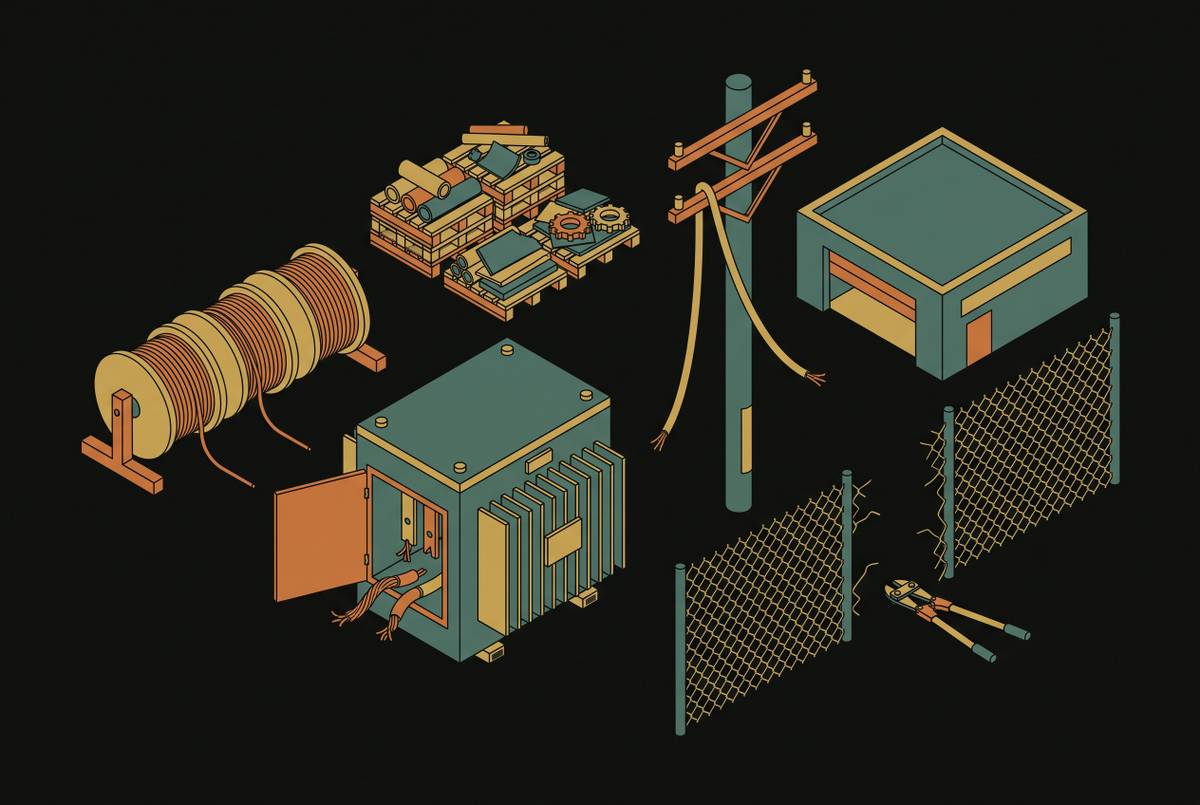
Plant security managers deal with a recognizable set of problems because of this: copper wire theft, scrap-metal theft, unauthorized fuel access, after-hours fence-line intrusion, contractor control, and remote equipment yards that sit far from any staffed building. Each of these problems traces back to the same physical reality: valuable material stored outside, across a large footprint, for long stretches of unsupervised time. Understanding that reality is the starting point for understanding why trespassing at these sites so often turns into something worse.
How a first perimeter breach invites a return
The first unauthorized entry at an industrial site rarely produces a meaningful response, and that lack of response is itself the reason a second entry becomes more likely. Graffiti, equipment sabotage, and deliberate destruction of materials are not random acts committed by strangers passing through. Many of these offenders come back to a location they've already scouted, so fencing and warning signs alone rarely stop someone who has already decided to act.
Crime-pattern analysis reads repeat victimization as a sign the offender feels confident, not as bad luck. A site hit once sends a low-risk signal, and that signal invites a return visit. The offender who comes back doesn't start from zero. The layout is known. The equipment locations are known. The weak points in the fence line are known. A site that gets hit once becomes a repeat target because the offender now holds site-specific intelligence that didn't exist before the first breach.
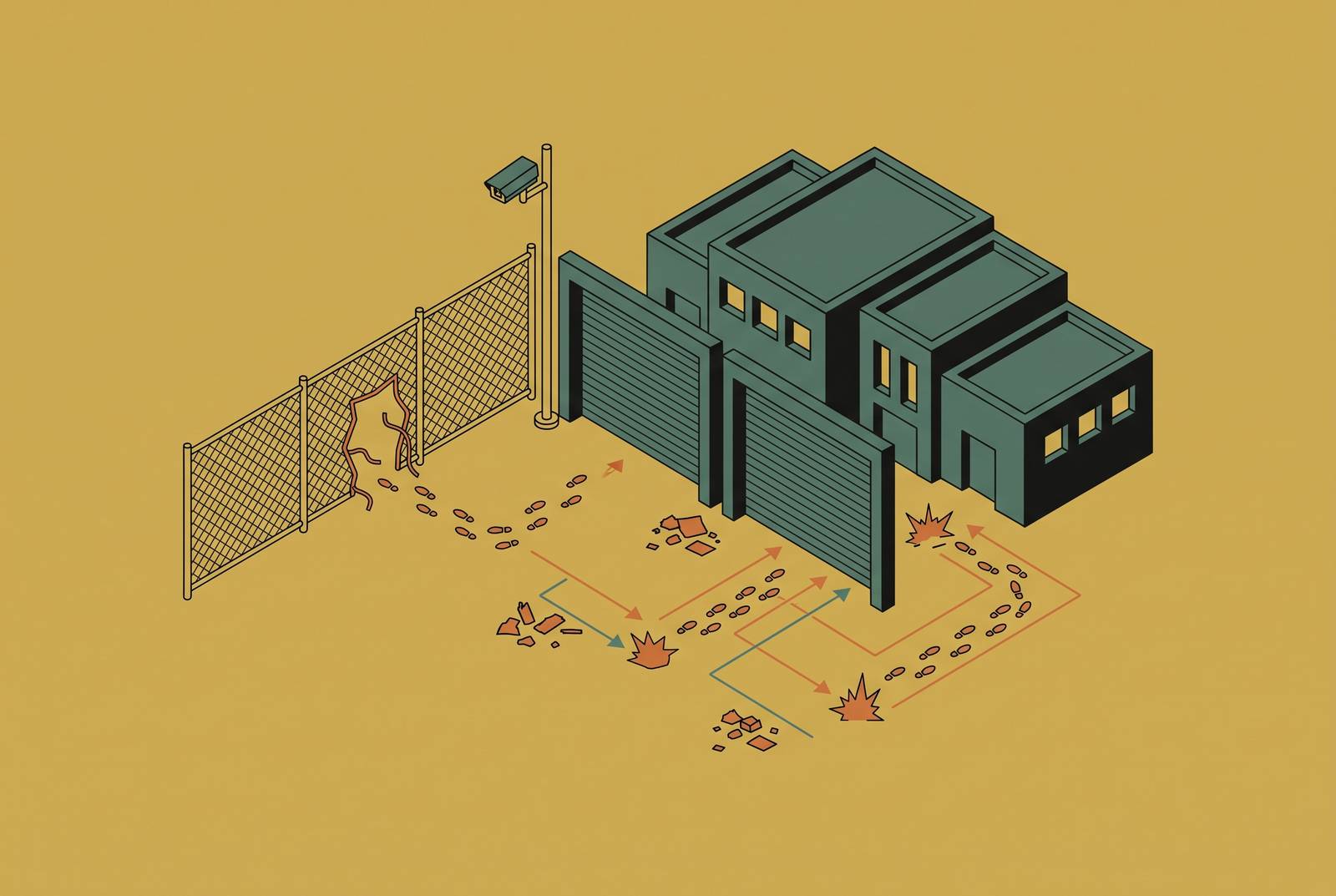
The initial breach functions as a scouting event, not merely an incident to log and move past. It produces information the offender carries forward: which gate was left unlocked, which stretch of fence goes unwatched, what time the site goes quiet, where the copper staging or fuel storage sits relative to the property line. A single weak point in an otherwise well-secured perimeter is enough to undo the value of everything else. A well-guarded main entrance means little if the fencing fifty yards away goes unchecked for a season.
The predictable sequence from trespass to theft to sabotage
Trespassing at industrial sites tends to follow a recognizable sequence: an initial perimeter breach, a period of behavioral scouting, escalation to material theft, and, if nothing interrupts it, sabotage or organized targeting. That progression is structural. Each step lowers the risk the offender perceives and raises the return the offender expects, so the sequence repeats across sites and across years instead of showing up as an isolated run of bad luck.
Different offenders enter the sequence at different points. Opportunistic actors exploit open sites and unlocked trailers without much planning. Local theft rings study delivery schedules and storage habits before they ever approach a fence line. Organized groups go further still: they arrange transportation and rapid resale before the theft even happens. Juveniles and vandals may have no profit motive at all, but their activity still signals weak guardianship to the more calculated offenders who follow behind them and read the same signs.
Security assessments at California job sites have identified a consistent set of escalation tactics: graffiti on equipment and structures, wire and copper theft that leaves collateral damage because vandals often destroy more than they manage to steal, equipment sabotage through fuel contamination, slashed hydraulic lines, and broken controls, unauthorized entry followed by deliberate destruction of material, and targeted attacks carried out by organized or otherwise motivated groups.
Copper theft shows how directly this escalation can hurt people beyond the fence line. California Attorney General Rob Bonta's office said copper wire thefts left neighborhoods in the dark, caused utility and telecommunications outages, and threatened public safety. A theft that begins as a property crime against one site ends as an outage affecting people who have no connection to that site.
The costs cascade well past the price of replacing what's gone. When equipment disappears overnight, work stops immediately, and replacement or rental can take days to weeks, so project milestones get pushed back in ways that compound over a job's schedule. Insurance complicates the recovery further: many policies require specific security measures to stay in force, and a standard policy may not cover business-interruption costs or rental expenses during the delay unless a specific endorsement was added in advance. Legal exposure can follow too. If a trespasser is hurt on-site during a vandalism incident, liability questions arise, even though property owners generally owe no duty of care to trespassers and are typically protected except under specific exceptions.
Targeted attacks by disgruntled workers, competitors, or organized groups demand more deterrence than opportunistic crime does. Standard fencing and lighting reduce the opportunistic incidents reasonably well. They do little against an offender who has already decided on a target and planned around the obstacles in the way.
The perimeter size that guarantees gaps in traditional coverage
The escalation sequence persists at sites that have already invested in conventional security because the perimeter itself is often too large for fencing, fixed cameras, and guards to cover without leaving gaps, even when all three are deployed together. A warehouse or manufacturing facility can run to hundreds of thousands of square feet, with parking lots, loading docks, storage areas, employee entrances, truck gates, equipment yards, and perimeter fencing extending well past the footprint of the building itself. Fixed cameras give good visibility in the areas they're pointed at and nothing at all a few yards past their field of view. An officer stationed at an entrance can manage access and respond to anything nearby, but can't watch every corner of a multi-acre property at once. A patrol covers more ground over the course of a shift, but only sees a given stretch of fence line while actually passing through it.
At a plant that spans several acres, a single gap in coverage creates more risk than a well-staffed main gate removes. Fixed cameras depend on poles, power runs, trenching, network access, approvals, and installation windows, all of which limit how far a camera system reaches, regardless of how badly a site needs it to reach further. Guards solve a different problem. They verify incidents, control access points, and escort contractors through the property, but they cannot continuously watch every back-lot road, unused gate, temporary laydown yard, and equipment corridor at the same time, no matter how experienced or diligent the team is.
What results from these constraints is a coverage model built on intermittent human observation, and that model is mismatched to how offenders actually operate. The escalation pattern depends on finding the gap and waiting for the quiet window, and active job sites face the highest risk on weekends and holidays, which is exactly when coverage runs thinnest. A site can have a full camera system and a staffed guard force and still hand an offender a reliable, recurring window of low-risk access somewhere along its edge.
How legacy monitoring centers fail to catch escalation in progress
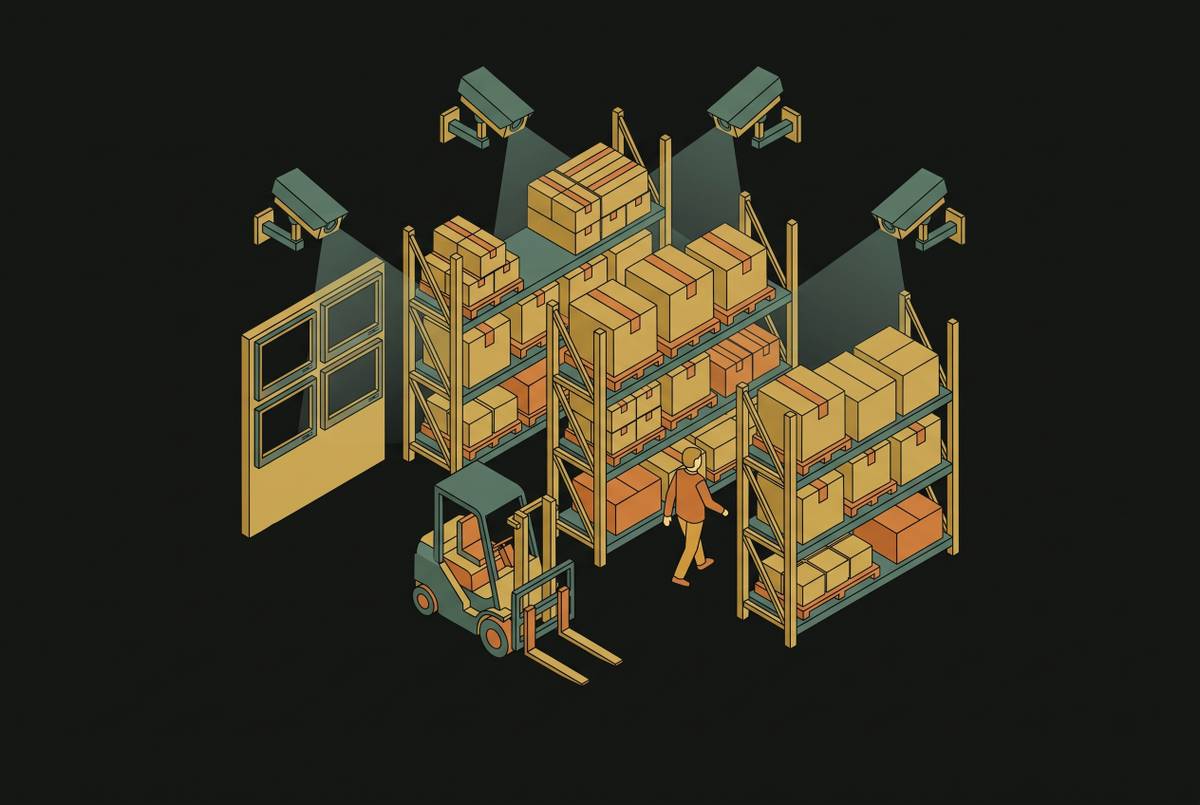
Even when cameras point at the right places, the architecture of a traditional monitoring center makes early detection of an escalation sequence difficult regardless of camera placement or guard staffing. Operators have to watch many feeds at once, and that attentional load wears them down well before any real event shows up on screen. The "Wall of Glass" model, in which an operator scans dozens of screens simultaneously, creates a detection environment that degrades fast as the number of feeds grows.
Most of the alerts that reach a traditional command center come from motion triggered by shadows, headlights, or animals. Operators learn quickly that most alerts are noise, and that lesson trains them to discount signals over time, a pattern a patient offender can exploit without doing anything active at all, simply by relying on the queue to absorb the warning.
That queue is where the real damage happens. When alarm volume runs high, a genuine intrusion waits behind a stack of routine false positives before a human ever looks at it. The gap between a sensor tripping and an operator acknowledging it is not the same thing as the gap between an intrusion happening and a response reaching the site. By the time a real event clears the queue, conditions on the ground have already moved on. At an industrial site, where a scouting visit can turn into an active theft within minutes, that queue delay is the window the offender needs.
Alert fatigue produces two failures that mirror each other. If you treat every signal as urgent, field resources get burned up chasing false dispatches. If you treat every signal as routine, a real escalation moves through the system undetected. The hidden failure in a traditional monitoring center is the time lost to false-alarm triage before a real event ever enters the queue, which is the step that connects directly back to the scouting phase described earlier: the low-risk return the offender has learned to expect depends on exactly this kind of delay.
What early interruption requires at an industrial site
Interrupting the escalation sequence before it reaches material theft or sabotage means catching the scouting phase, which requires two things working together: continuous attention across the perimeter, and triage fast and accurate enough to reach a human before the window closes. Early interruption happens at the first unauthorized approach to a fence line, not at the moment equipment disappears from the yard. That's only achievable if the monitoring layer watches continuously rather than intermittently, and can tell authorized activity apart from unauthorized activity in the context of that specific site.
Site-specific context matters here. A distribution center with constant truck traffic has a different baseline of normal activity than a manufacturing facility where valuable outdoor equipment sits untouched overnight. Security teams need a way to separate ordinary business activity from activity that warrants a closer look, and making that call depends entirely on knowing what normal looks like at that particular property. Schedules, authorized personnel lists, contractor access windows, and delivery patterns all need to feed into what a monitoring system flags and what it lets pass.
When a verified event does occur, the operator's first job is to confirm what's actually happening: where, and whether it matches a known threat pattern or a routine, authorized activity. Response protocols set in advance, covering who gets notified, when to escalate, and when to dispatch, let a verified threat move quickly through the decision chain instead of waiting on an operator to improvise a plan in real time.
AI systems capable of reasoning about site context let a single trained operator focus only on verified events, compressing the time between an intrusion and a response down to a window that can actually interrupt what's happening as it occurs. Continuous machine attention feeding verified events to human judgment instead of flooding a human with raw noise is the functional model here: live monitoring that spots suspicious activity and triggers the right response. Video-verified alarms also tend to get a faster police response, since departments prioritize calls that come with visual confirmation of criminal activity in progress.
Pairing AI filtering with human response fixes the structural flaw in the queue described earlier, making it possible to interrupt the escalation sequence at the earliest stage where it can actually be detected.
Matching coverage to the zones where escalation starts
Escalation begins at the perimeter and moves inward toward the assets it eventually targets, so security coverage needs to be heaviest at the fence-line and access-point zones where the first breach happens, not concentrated solely around the assets those breaches are aimed at. The zones where escalation starts are not always the zones that get the most attention from a security plan. Fixed cameras and officer posts tend to cluster around high-value interior assets: gates, control-room entrances, loading docks, warehouse entry points.
But the scouting phase takes place somewhere else: the fence line running along the back of the property, the back-lot road nobody drives often, the remote equipment yard, the contractor staging area set up for a six-month job and then forgotten. These are the locations sitting at the edge of what a fixed camera can reach and outside the window a patrolling guard actually walks. Recognizing that the escalation sequence starts at the edge of a property, not its center, changes how a security plan ought to allocate its coverage. The fence line deserves the same seriousness as the loading dock, because that's where the sequence this piece has traced, from breach to scouting to theft to sabotage, actually begins.