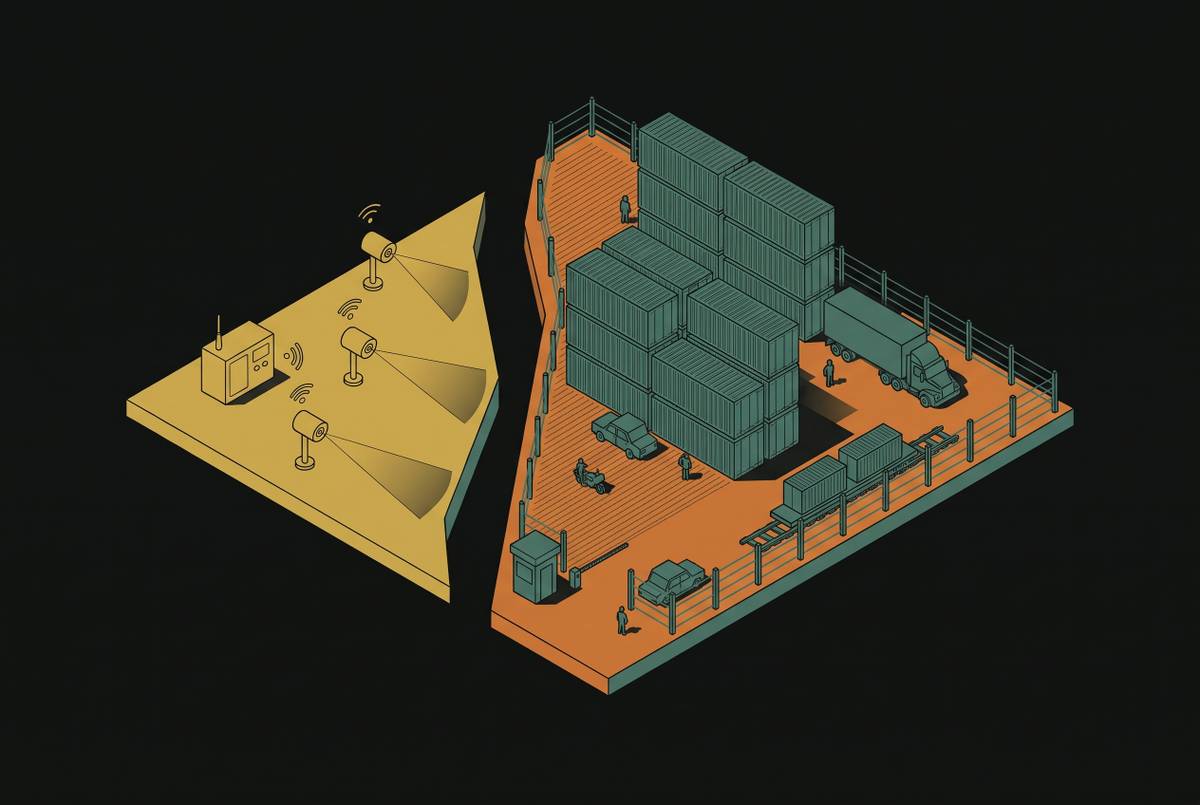
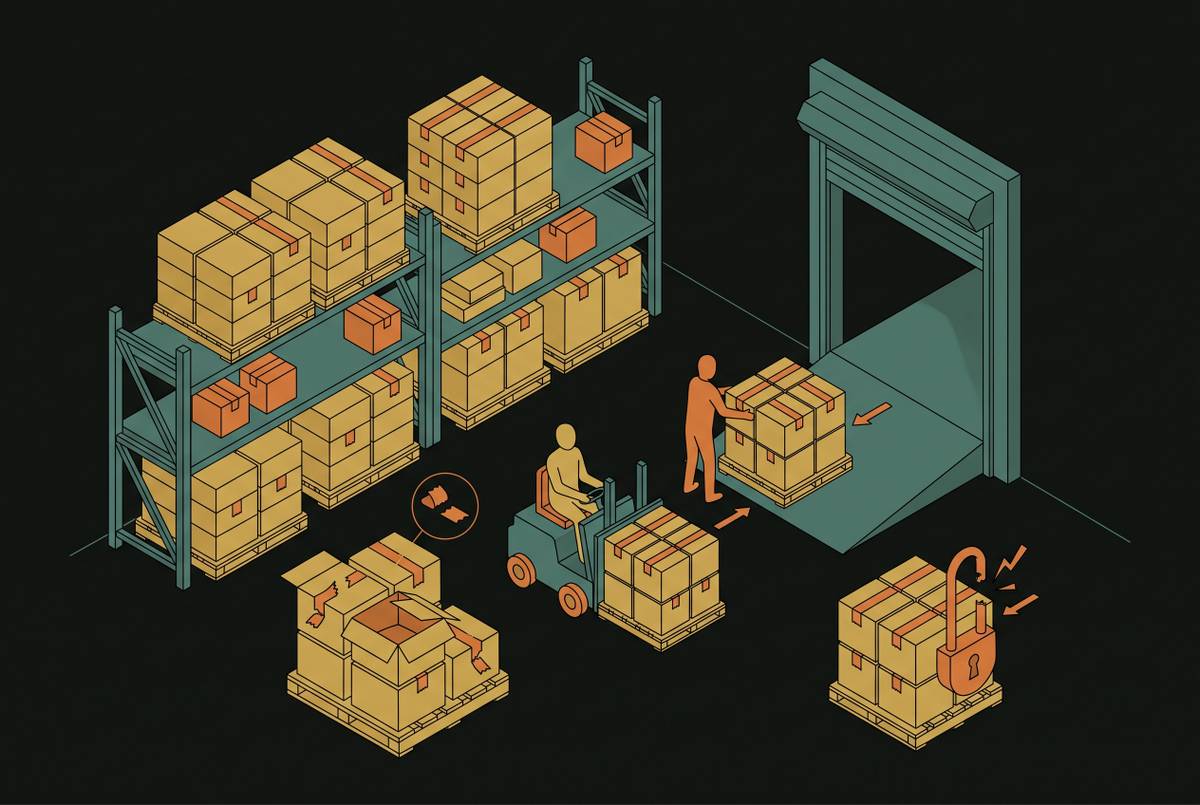
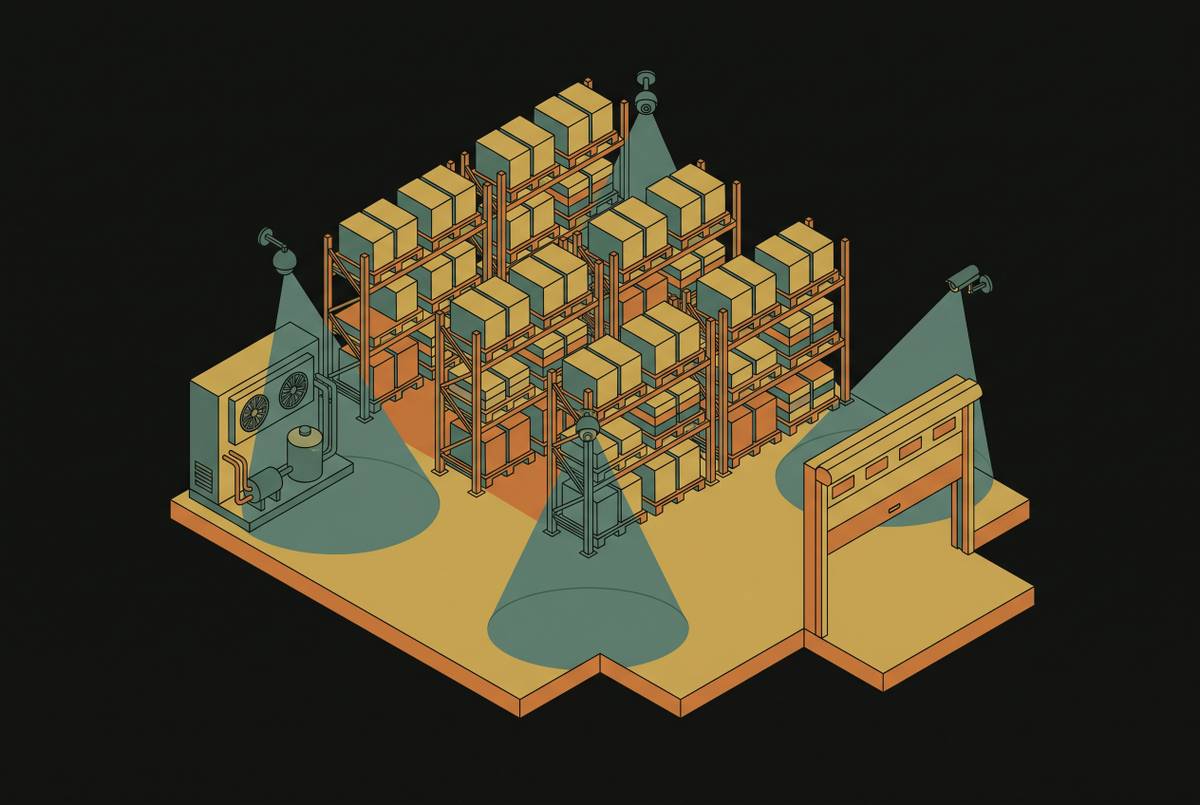
How AI-Augmented Monitoring Converts Raw Freight Yard Video Into a Theft Intervention
It explains how contextual AI filters yard alerts so operators can act.
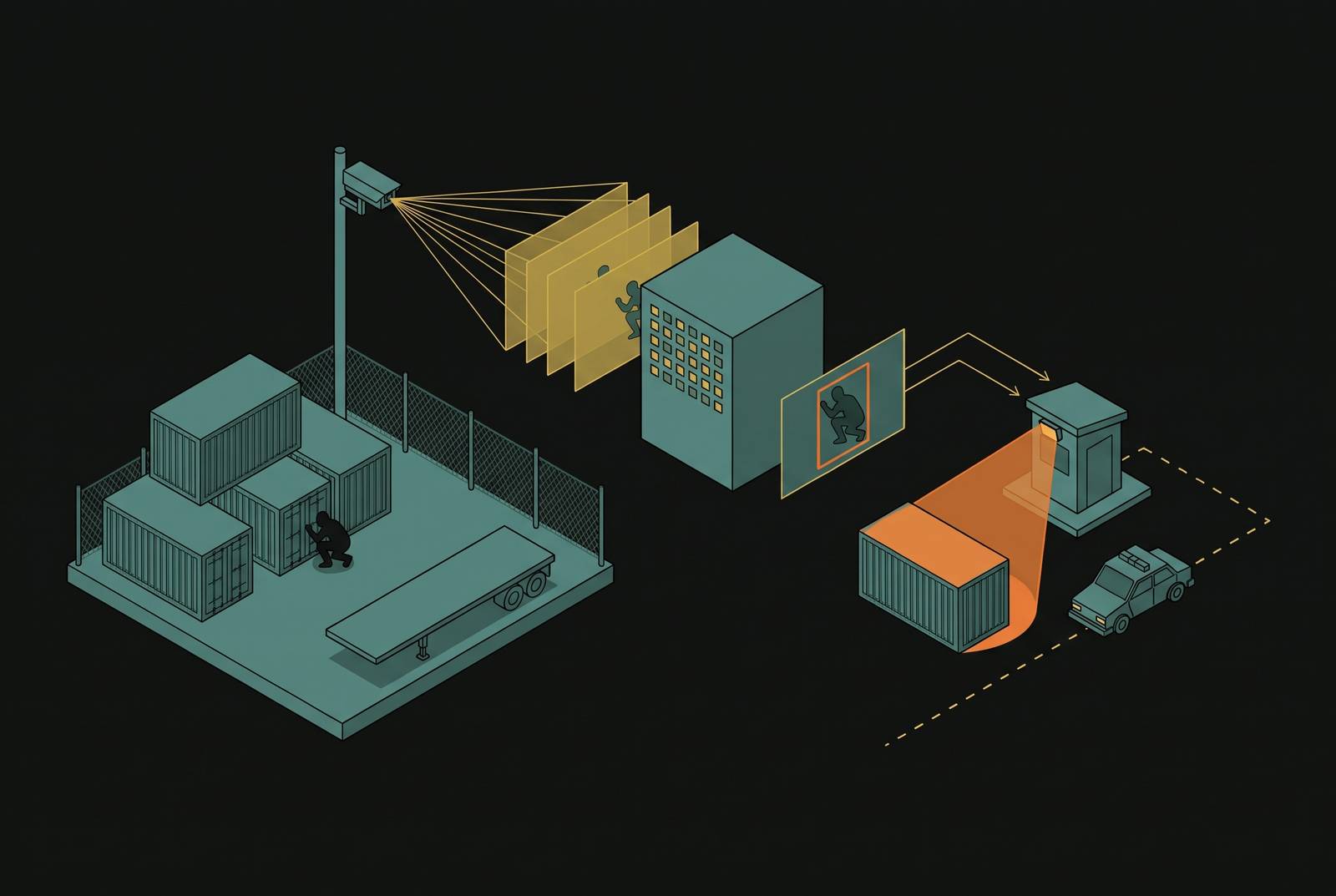
AI-augmented remote video monitoring for truck yards and freight facilities turns video into action to stop theft by using contextual reasoning and selective escalation and getting people to act in time. Cameras and object detection alone cannot make that conversion. The decisive factor is whether the monitoring architecture can resolve routine activity automatically and bring a qualified threat to an operator while intervention is still possible.
Why freight yards became the primary target for organized cargo theft
Verisk CargoNet's 2025 analysis found that the total number of incidents stayed about the same while confirmed cargo theft incidents rose and the average value per incident rose sharply. That pattern points to more precise targeting of higher-value loads. CargoNet identified food and beverage as the most-targeted category, with thefts rising substantially. The commodity selection suggests organized demand. Yards face organized criminal groups that take advantage of schedules they can predict, weak perimeters, and gaps in credentialing.
The American Transportation Research Institute's October 2025 research found that strategic cargo theft grew from a small share of incidents in 2022 to roughly a quarter by 2025. That category includes fictitious pickup, double brokering, and phantom carrier fraud. Yet the threat is not confined to paperwork. As fraud tools on logistics platforms became harder to use, criminal groups moved back toward stealing loaded trailers that were left unattended. Fraud and intrusion are different routes to the same freight.
Munich Re's Cargo Theft Tactics and Trend Report 2025 identifies the yard conditions that make those routes attractive, including high asset density, frequent vehicle turnover, variable overnight staffing, and the combination of operational hub and storage zone. Those conditions complicate the distinction between normal movement and theft. A loaded trailer can be both stored inventory and the next scheduled departure. When an attacker presents cloned credentials or a spoofed carrier identity, apparent authorization no longer establishes legitimate intent. Yard security must account for what happens after access.
Why recording the theft is not the same as stopping it
Traditional CCTV provides a record of activity, but a record does not interrupt a trailer leaving the yard. First-generation analytics add alerts but may leave out the context a person needs to judge them. The cameras may perform exactly as designed. Detection still leaves a person to sort routine movement from a possible theft, often among many alerts that have nothing to do with it.
Systems tuned to catch every movement also fire on shadows, headlights, weather, and passing vehicles. Operators learn that most notifications are noise, while genuine intrusions compete for the same attention. Alert fatigue is therefore more than an inconvenience. Sophisticated actors can exploit it by generating enough activity that a real intrusion waits behind false positives.
Access control leaves a separate gap unresolved. A badge reader or perimeter alarm leaves unresolved whether a credentialed driver represents a legitimate or phantom carrier. If the monitoring system treats that entry as sufficient reassurance, it misses the behavior that could expose the fraud.
A yard can have footage of the approach, entry, and departure yet lack a timely decision at any point between them. The resulting video may support an investigation, but the freight is already gone. Closing that gap requires a layer that interprets activity before it enters the human-review queue.
What the AI reasoning layer actually does between detection and human action
Object detection identifies what is visible. A truck at a dock may be a scheduled delivery or a phantom carrier. A person near a trailer may be checking equipment or preparing an unauthorized intrusion. The objects can look much the same. The distinction depends on time, location, duration, and consistency with expected operations.
A reasoning layer applies that context to the detection. It assesses whether the vehicle is expected, whether the pickup falls within the scheduled window, and whether loading direction fits the planned movement. Pallets moving out during a scheduled inbound shipment deserve different treatment from pallets moving in. Likewise, a driver lingering near a trailer without dock activity presents a different pattern from an ordinary equipment check. These comparisons qualify an event without treating every visible person as a threat.
The system moves from alert-then-human-review to a detect-decide-orchestrate-verify loop. Class filtering narrows the kinds of objects under consideration, while zone masks define where activity is relevant. Dwell rules account for how long it persists. The system then classifies the event, resolves routine activity automatically, and routes ambiguous or high-stakes cases to a person. Operator feedback helps tune that process around the site's actual conditions.
There is an important limit to this reasoning. Video AI cannot, from behavior alone, authenticate credentials or cross-reference a bill of lading. Operational integrations must provide information that the image cannot. Even without reading the paperwork, however, the system can flag behavior inconsistent with the supposed transaction. That is an anomaly requiring attention. Human oversight remains necessary for the consequential judgment, but it need not be spent on every routine triage decision.
Why night and weather conditions are where yard AI systems fail or prove themselves
Contextual reasoning needs an image it can work with. Freight yards challenge that dependency with sodium and LED light pools separated by deep shadow, infrared and low-light imagery, weather, steam, and distant subjects. Wide fields of view further reduce pixel density. These conditions occur during the overnight hours when organized theft groups most often operate.
Where the cameras sit and how the analytics work must fit what they need to detect. A wide-angle view across a large apron at night presents a different problem from a narrow-angle view of a gate. A model that performs well on clean daytime footage has not demonstrated that it can distinguish activity across either surface after dark. The relevant test is site-specific performance under the conditions in which an intervention would be needed. Without that test, the reasoning layer bases its decisions on observations it cannot rely on.
Thermal cameras offer one route for remote or low-bandwidth environments. They can run inference at the edge, identify a human intrusion locally, and send only the relevant alert. This uses less bandwidth and helps detect intrusions in difficult conditions. It does not remove the need for calibration. Weather, infrared imagery, occlusion, and shadow patterns still have to be accounted for in the analytics stack.
Those adjustments allow class filtering and dwell logic to produce meaningful escalations. But AI is not inherently the better option. The wrong model paired with unsuitable hardware can perform worse than a well-tuned traditional system. The architecture argument is conditional on the vision layer working in the yard itself.
How AI video monitoring alerts human operators fast enough to intervene
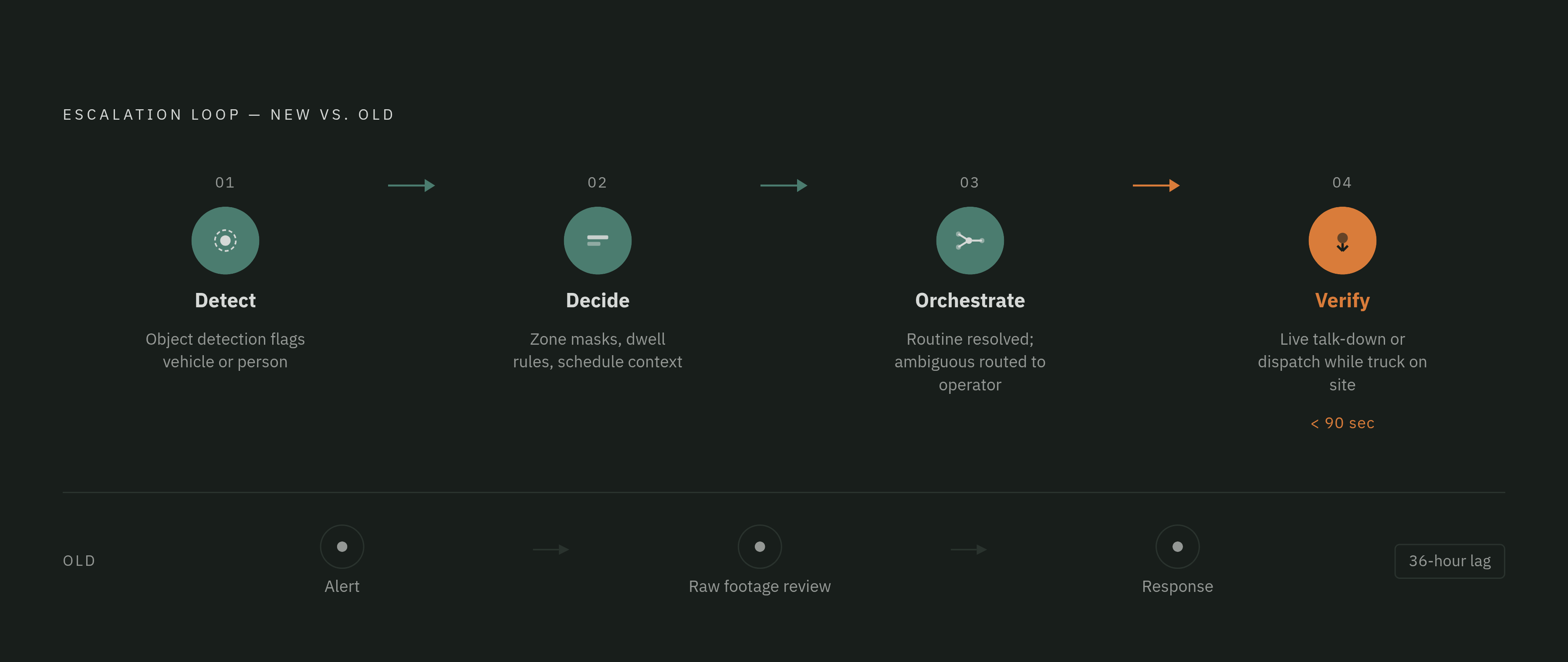
Once an event is qualified, routing speed becomes part of the security function. A suspected intrusion should not sit at position twenty behind unverified motion alerts. The purpose of automated triage is to deliver context with the escalation, so the operator can judge the event rather than begin the investigation from raw movement. Qualification must shorten the path to action.
The response contrast is between a 36-hour lag and a sub-90-second escalation target. With the longer lag, people find and review a theft after it is over. The shorter target aims to get a qualified event to someone who can decide what to do while there is still time to act. Neither figure alone establishes effective deterrence. For an unattended loaded trailer, the operator must receive the event before the truck departs.
The operational fulcrum is a live talk-down. A remote operator can use a monitored camera with a speaker to address the activity while it is happening. Unlike static recording, that creates an opportunity to interrupt the event. The operator decides whether a warning is appropriate and how to deliver it, using the behavior and context already assembled by the AI.
This division changes the work of the monitoring center. People spend their time judging what to do and what could follow, instead of repeatedly dismissing ordinary yard movement. A smaller operator team can cover a meaningfully larger set of sites when routine activity is resolved automatically.
What the architecture of an AI-native monitoring service looks like end to end
An AI-native service designs its review queue around automated resolution, rather than adding analytics to an existing human-review workload. Edge or cloud analytics classify and filter activity at detection. A reasoning layer then applies schedules, zones, and expected behavior to resolve routine events and flag those requiring attention. Trained operators get the cases that need their judgment.
License plate recognition at gates, bill-of-lading and scheduled-pickup cross-references, and after-hours behavioral baselines provide context beyond the image. Zone-mapped camera coverage connects the analysis to dock doors, trailer rows, and the perimeter fence. Each serves a distinct purpose. Gate information supports the assessment of arrivals, while behavior in a trailer row may reveal a concern that an apparently valid arrival did not.
That distinction also clarifies what camera-agnostic platforms contribute. Most yards already have cameras, so intelligence can be layered onto existing infrastructure rather than making camera replacement the organizing principle. Compatibility alone is not enough, however. The analytics and monitoring service still have to handle real freight-yard footage, including difficult night conditions, for the first detection to be dependable.
At multiple sites, a single platform supports consistent oversight and standardized protocols without requiring headcount to rise proportionally. AI handles detection and resolves routine activity, while trained operators use set escalation pathways for cases that are unclear or have high stakes. This operating model's potential to scale rests on preserving human attention for consequential events, rather than expanding an undifferentiated queue across more locations.
Why a pure-AI deterrence model is not enough and what the hybrid gets right
The strongest objection to keeping people in the loop is that a system capable of classification and escalation might also automate the response. But classification and intervention impose different responsibilities. Recognizing a behavioral anomaly does not establish which consequential action is justified. A voice warning, law-enforcement dispatch, or gate hold needs a person who can judge the context and take responsibility for the decision.
The phantom-carrier scenario makes that distinction concrete. Behavior that does not fit a scheduled pickup can be grounds for escalation even when the paperwork looks correct. It does not, by itself, settle the driver's intent. An operator must assess the qualified event and decide whether to issue a live warning or dispatch law enforcement while the truck is still on site. After departure, even an accurate classification serves reporting for that event.
AI supplies coverage, classification, and routine-activity resolution. People handle ambiguity and the consequences of acting. That division keeps human accountability without restoring the human bottleneck at every detection. Its effectiveness still depends on sound calibration and an escalation queue that permits a timely response.
Camera count describes coverage, but not whether anyone can act on what those cameras reveal. The stronger criterion is whether detection, reasoning, escalation, and human response form a working path to live intervention before the freight leaves the yard.