Cold Storage Warehouse Security Blind Spots and Monitoring Gaps
Freezer environments create blind spots where cameras fog and software lacks temperature context.
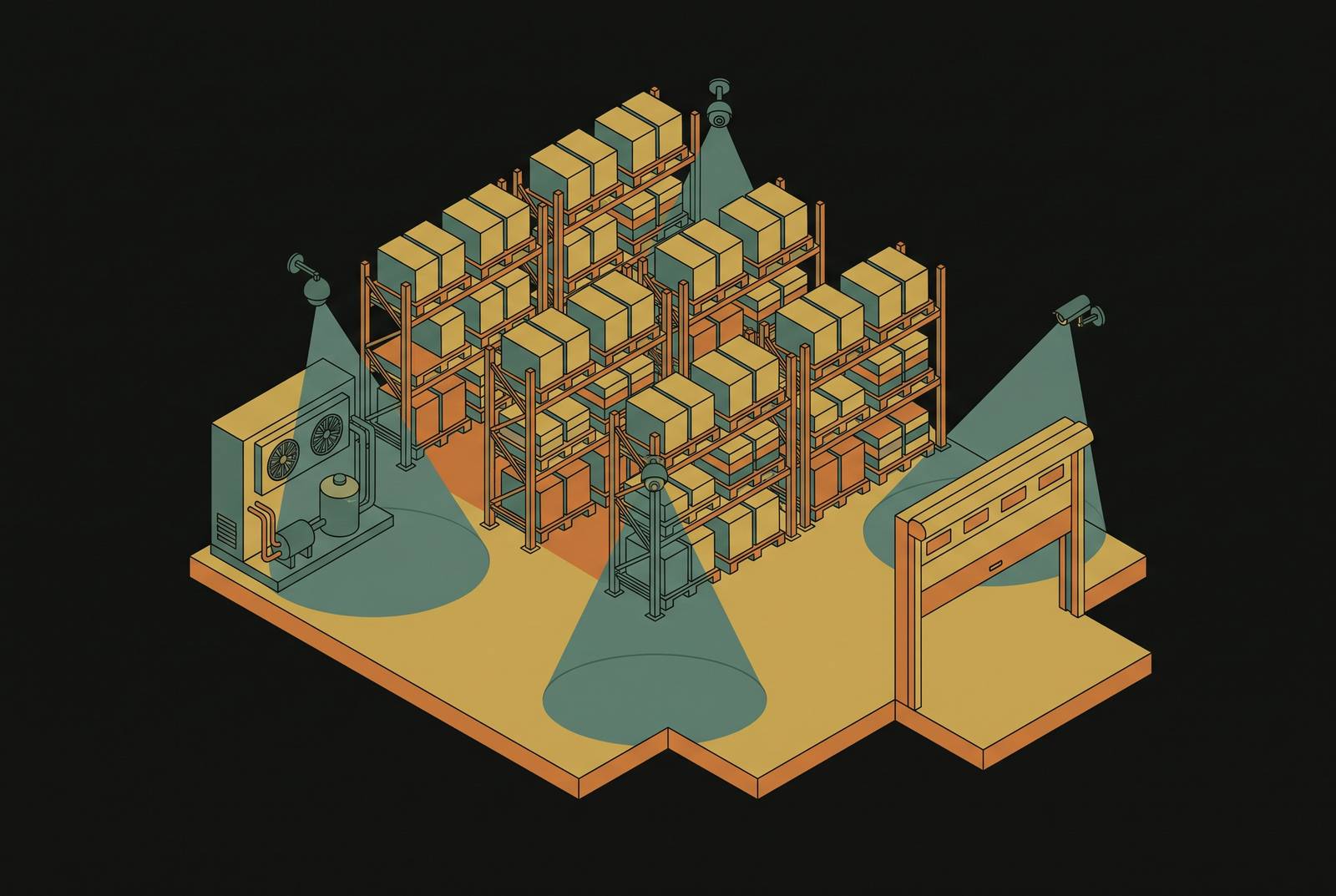
Cold storage warehouses have security blind spots where the environment makes cameras, software, and alarm handling work less well than expected. Frozen aisles, staging transitions, and dock entries are places where losses can be high and much is hard to see. Monitoring must link who has physical access, how product is exposed, and which site-specific operating rules apply while there is still time to respond.
Why cold storage warehouses are structurally different from standard warehouses as security environments
Cold storage’s physical conditions change what security equipment can see, how reliably it operates, and what software must understand. Sustained operation below freezing combines with thermal cycling as personnel and vehicles move between ambient and frozen zones. Standard cameras can fog, accumulate condensation, or suffer component failure under those conditions.
The building’s geometry adds a separate constraint. High-rack aisles form narrow, deep visual tunnels in which a wide-angle image may show the aisle without resolving actionable detail at its far end. Focal length governs coverage quality more than megapixel count in these conditions. Meanwhile, freezer, cooler, ambient staging, and dock areas have different hardware requirements and risk profiles. Treating them as one surveillance environment conceals those differences.
Hardware capable of operating in frozen zones requires heaters, anti-condensation housings, and cold-rated components. That equipment costs much more than standard cameras, which puts pressure on budgets to cut coverage where the risk of pilferage is highest. Software can reinforce the resulting false assurance. Generic warehouse systems built for ambient buildings have no model of temperature zones, door-open dwell time, or staging lane exposure. An open door or a pallet left in staging can increase refrigeration load without the system explaining why. The operator may therefore have both cameras and operational software while lacking a reliable account of what is happening.
Where physical security and temperature integrity converge into a single loss event
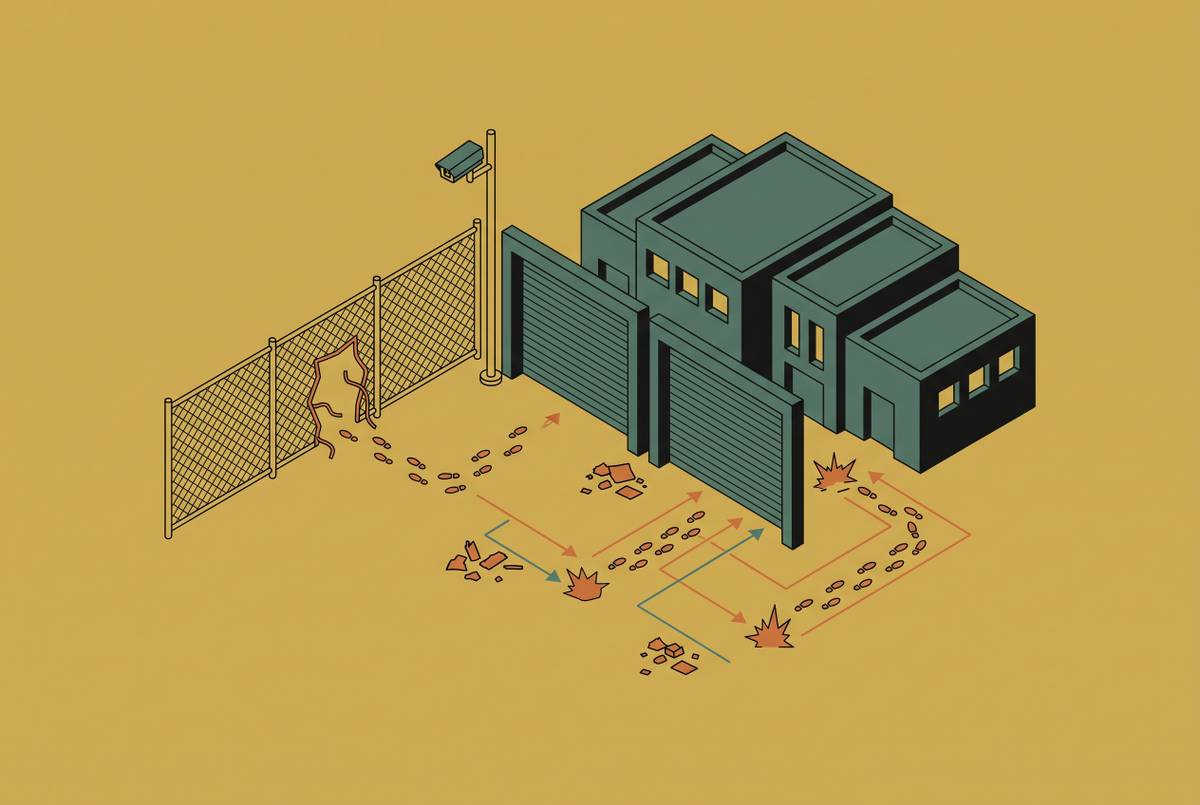
A physical breach and a product quality failure are frequently the same incident in cold storage. A door held open during unauthorized entry also exposes the refrigerated zone to a temperature excursion. Product can begin drifting toward the food danger zone within minutes of a sustained breach. The entry and the exposure are not independent events. They are two consequences of the same opening.
Cargo interference creates a similar overlap. A tampered or diverted load is both a theft event and a chain-of-custody failure, potentially requiring destruction of the entire affected lot. Security investigation and quality disposition cannot then be separated cleanly. An unobserved sensor failure or door-seal breach creates another ambiguity when discovered overnight. Without an account of the preceding activity, its effects may be indistinguishable at discovery from deliberate interference with temperature controls.
A security officer who dismisses a temperature alarm as outside the security remit and a facilities team that treats a held-open door solely as maintenance leave the same event unexamined from opposite sides. When temperature monitoring is separate from inventory and access data, an excursion can continue for hours before anyone connects it to exposed pallets. The loss may already be unrecoverable by then. A held-open door paired with an after-hours access attempt has a different meaning from either signal alone, but siloed systems produce siloed responses that leave these highest-risk moments uncovered.
Why loading docks and zone transitions concentrate the most damaging blind spots
Drivers, carriers, and third-party vendors use a route they are allowed to enter through, but they are still outsiders to the facility. Because they are allowed to be there, the dock is a natural route for opportunistic theft and organized cargo diversion. Camera coverage alone cannot settle whether that access is appropriate. A person must check driver credentials, match vehicles, and decide how to handle exceptions.
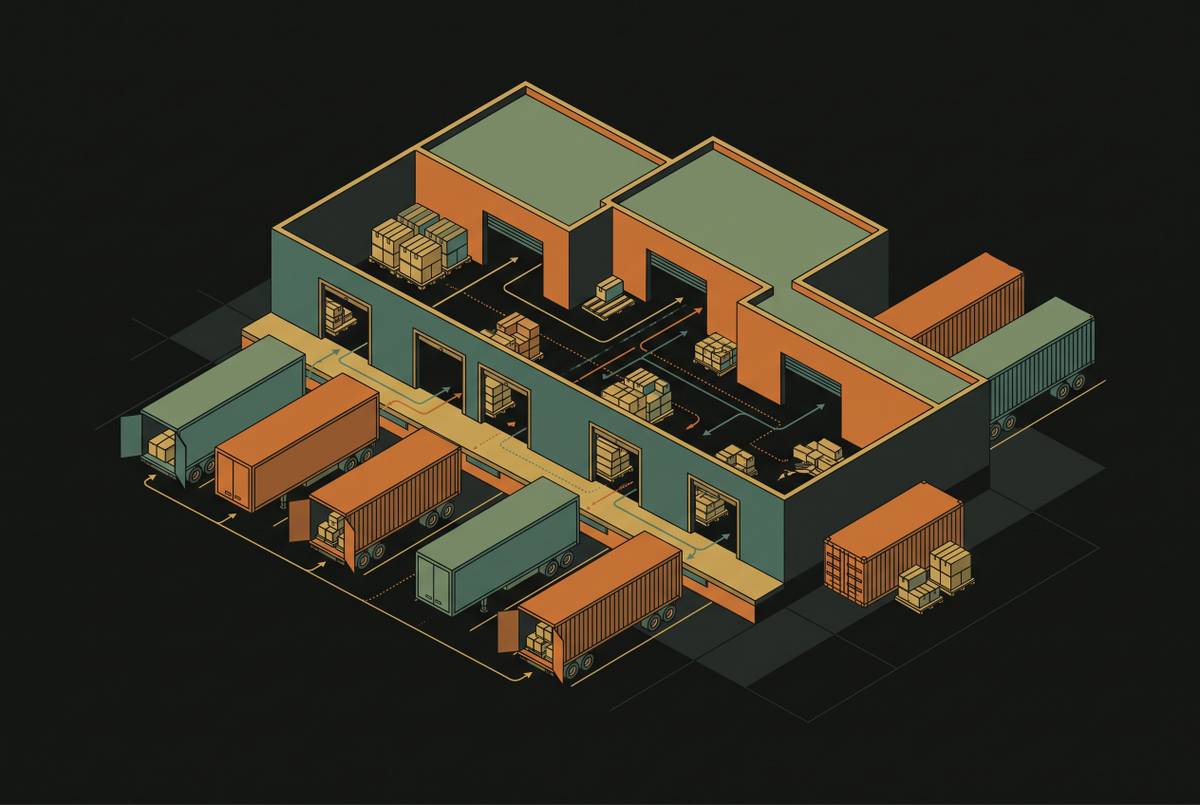
At the same time, the dock door is the largest and most frequently opened breach in the cold envelope. Every inbound and outbound movement exposes interior zones to ambient air, while pallets may wait between the truck and the freezer. The temperature in those staging lanes is often uncontrolled. Even temperature-controlled staging remains a significant cold-chain risk point because it is a transition between storage and transport.
Door-open duration, staging dwell time, and pallets parked between controlled zones are not simply inventory movements, yet standard systems cannot model or flag their significance. The facility absorbs spoilage and refrigeration costs without a system explaining the underlying exposure. A dock camera may record people, vehicles, and cargo throughout that interval without connecting any of them to the temperature risk. This is why the dock is the most consequential gap in the facility. With so much traffic, doors opening and closing, outsiders who can reach cargo, and little context about the work underway, a monitoring failure can cause great harm in very little time.
How frozen interior zones become under-monitored despite being high-pilferage areas
Inside the freezer, camera budgets often allow only the bare minimum of coverage, leaving parts of the space poorly watched. The cold-rated equipment described earlier is a physical necessity. Its premium applies at every camera position across a facility that may require dozens of them. Reducing the number of positions contains that cost. It also leaves less coverage in low-traffic areas where overnight removals may have few witnesses.
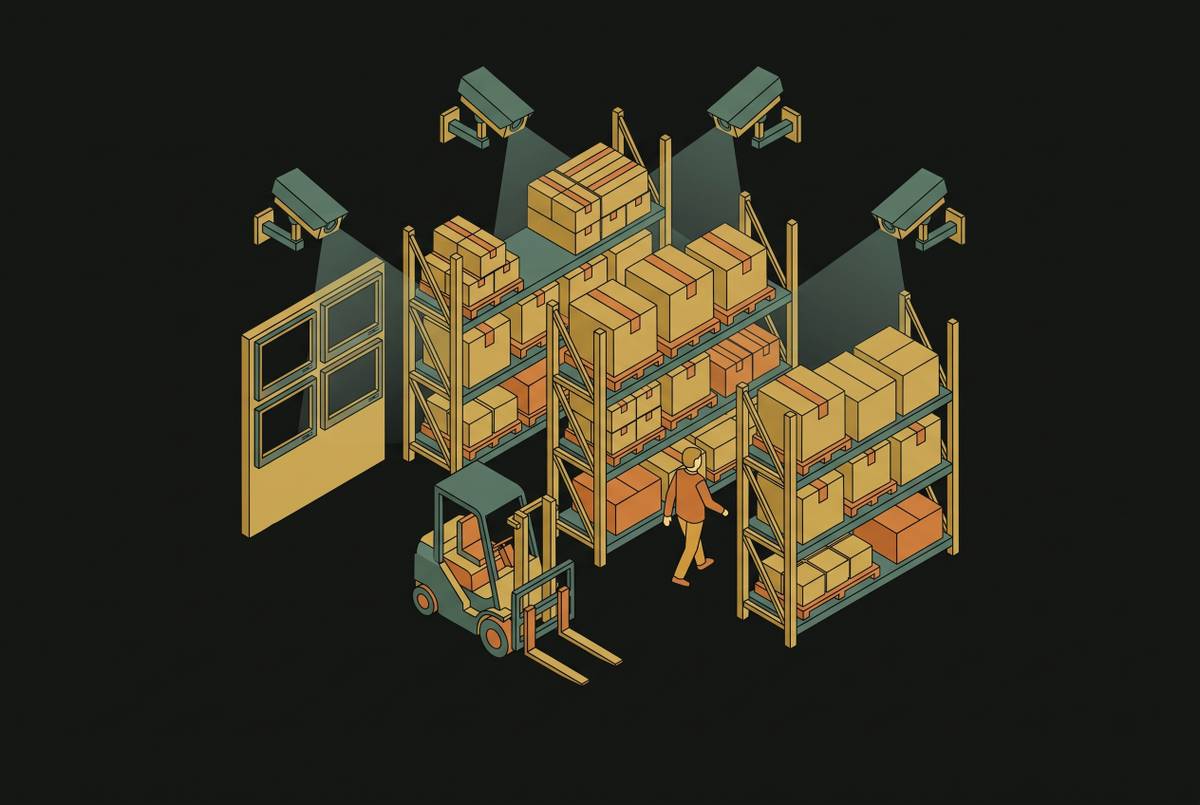
Aisle geometry makes each missing or poorly specified position more consequential. A wide-angle lens can show a long aisle without resolving a face or distinguishing product movement at its far end. A higher megapixel count does not by itself correct an unsuitable focal length. If identification at aisle depth is the purpose of a position, an image that cannot identify the individual does not fulfil that security function. The scene is visible, but the evidence is insufficient.
That combination favors slow-burn pilferage involving small, repeated removals of high-value product. With thin coverage, the activity is hard to spot, and a lack of detail leaves less that can be learned from reviewing the footage later. The financial exposure is therefore not proportional to the apparent size of any single removal. Repetition can remain hidden until inventory reveals the loss. Even a suitably placed camera does not close the gap if it only records. Without active monitoring, footage may exist while the opportunity to intervene passes, shifting the problem from what the camera captures to what happens after it detects activity.
Why legacy monitoring center architecture cannot handle cold storage alarm volume
Cold storage generates a high volume of environmental false positives through thermal gradients, condensation, forklift movement, and refrigeration equipment cycling. Legacy video management systems were engineered for storage and retrieval. They can record reliably without distinguishing refrigeration equipment cycling from a person moving through a freezer aisle at 2 a.m. Recording and interpretation are different functions. The burden of making that distinction falls on the monitoring operator.
Operators can watch only a limited number of feeds at once, and continuous monitoring degrades attention. Under sustained alarm volume, the practical response is often to mute the noisiest cameras. In cold storage, those can be the frozen interior and dock feeds producing frequent motion-triggered alerts from non-security sources. Muting removes their real threats from attention with the noise.
Threats on unmuted feeds face a different failure. They enter behind the alarms that fired before them, so a verified threat can wait many minutes while routine events are processed in order. The response window may close before the operator reaches it. Adding an AI analytical module does not necessarily remove that delay because a module grafted onto the existing pipeline inherits its latency and data silos. The system’s architecture must support interpreting and prioritizing an event when it occurs, rather than merely passing another alert toward an already occupied operator.
What alarm reasoning — rather than alarm flagging — looks like applied to cold storage events
Alarm reasoning connects video, access records, environmental signals, and device state before asking a human to respond. A held-open dock door illustrates the distinction. Its significance depends on whether an authorized delivery is underway, whether the access log records a badge event, whether the camera shows a known vehicle, and whether the adjacent zone’s temperature is beginning to drift. An isolated door trigger cannot distinguish those circumstances. Correlation can turn the trigger into an event with operational meaning.
The workflow begins with detection in real time. The system then correlates the alarm with video, access logs, and device state rather than handing the raw trigger directly to an operator. On that basis, it acts by clearing the event automatically or escalating it with the relevant context assembled. Resolution produces a complete audit trail. The operator receives a verified event and a recommended action instead of an unexplained alarm requiring a fresh investigation.
An after-hours dock event shows how this approach addresses the combined security and temperature risk. No badge record accompanies the door activity, temperature is drifting in the adjacent freezer zone, and a camera detects motion in a high-rack aisle. Read separately, those observations can enter different queues or be treated as noise. Read together, they establish a threat warranting immediate escalation. The architecture gives the operator a connected account of the entry and its consequences.
Human judgment remains essential at that point. The operator’s task is to decide how to respond to a confirmed intrusion with product access, rather than spend the available time dismissing environmental false positives. This redistribution places the operator’s attention at the moment when intervention is still possible. However, the reliability of the correlation depends on what the system knows about the facility’s authorized activity.
Why site-specific protocol knowledge is what separates useful AI filtering from another source of noise
An AI agent needs more than generic security rules to make sense of cold storage activity reliably. It needs shift schedules, authorized vendor lists, dock receiving windows, zone-access rules, and refrigerant emergency protocols. Without that context, it can classify permitted work as a threat while missing activity that violates the site’s actual procedures. More analysis without operating knowledge can produce another stream of alarms that operators learn to distrust.
Access schedules give movement its meaning. A forklift operator in a freezer aisle at 6 a.m. may be routine, while the same motion at 2 a.m. on a weekend is not. Dock receiving windows and expected carrier lists provide an equivalent distinction for vehicle arrivals. A truck during its scheduled window is expected, but the same truck two hours early with a driver whose credentials do not match the expected-pickup list is an exception requiring escalation. Zone-transition rules also set out who may cross between ambient staging and freezer areas, and under what conditions.
Unusual atmospheric readings or particular equipment alarm states can call for a refrigerant emergency escalation path. Personnel near the equipment need the applicable evacuation and escalation procedures, and the monitoring agent needs to recognize the protocol boundary. Otherwise, even an accurately detected event can be directed into the wrong response process. Useful reasoning depends on recognizing both what happened and which site procedure governs it.
For buyers, the practical test is therefore not whether a monitoring provider uses AI. Buyers need to assess what the system knows about the site and how that knowledge gets built and maintained as operations change. A provider unable to explain that process has not resolved the cold storage monitoring problem. It has placed a new analytical layer over the same gap between an alarm and an informed response.