Why Alarm Queue Backlogs Leave Commercial Properties Unprotected
AI filtering before human review prevents genuine threats from waiting behind false alarms.
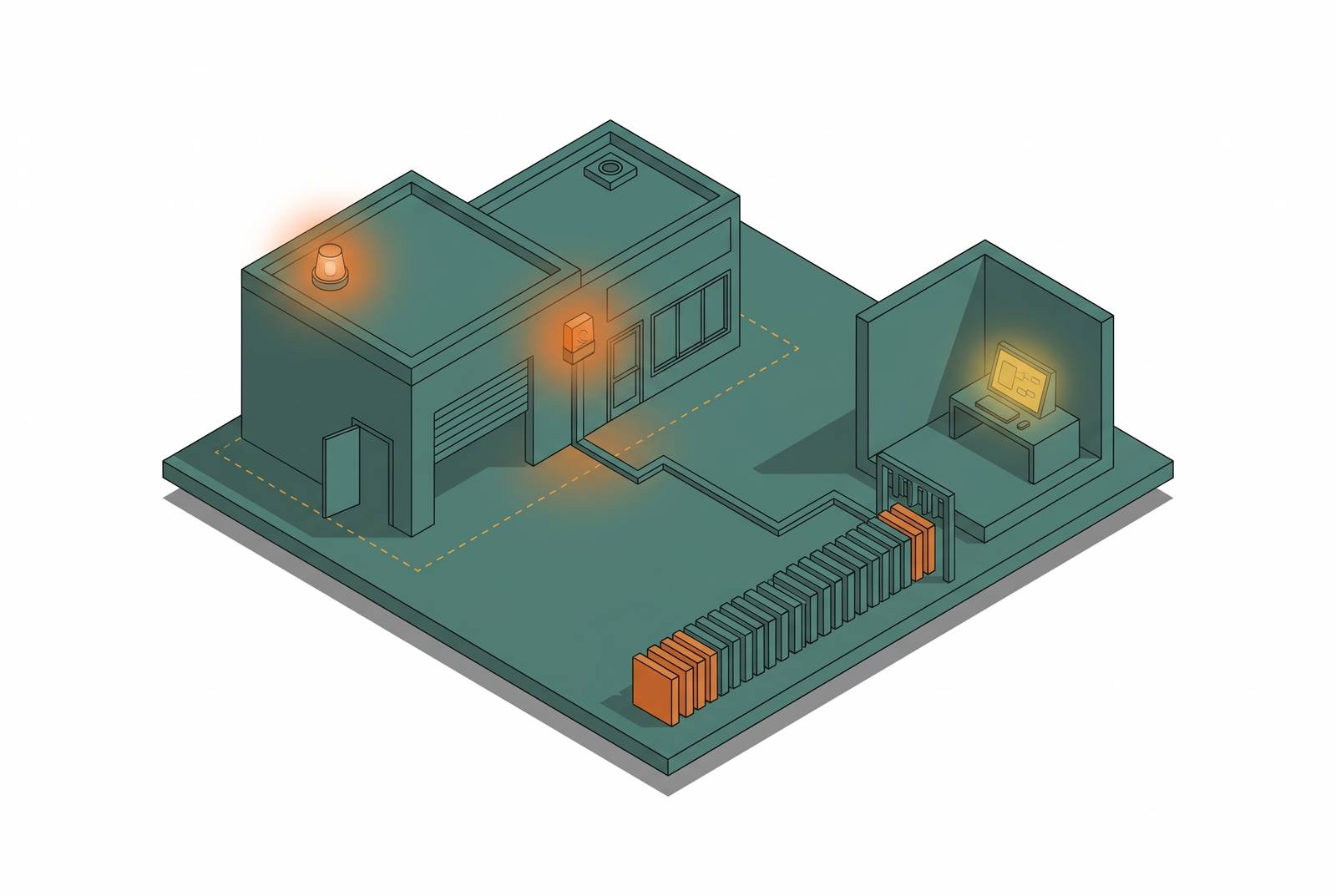
Alarm response time fails in traditional video monitoring centers when false signals join genuine threats in the same queue for human review. When alarms arrive faster than operators can review them, real events wait behind noise while the threat is still active at the property. Preventing that exposure requires filtering before human review.
How alarm queues are built and why queue math shapes every outcome
The ASU Center for Problem-Oriented Policing puts the likelihood that an alarm notification indicates a real threat at only a small fraction of activations. Sequential review therefore means processing long runs of false signals before encountering a genuine event. The false-alarm ratio determines how much review capacity goes to events that require no response.
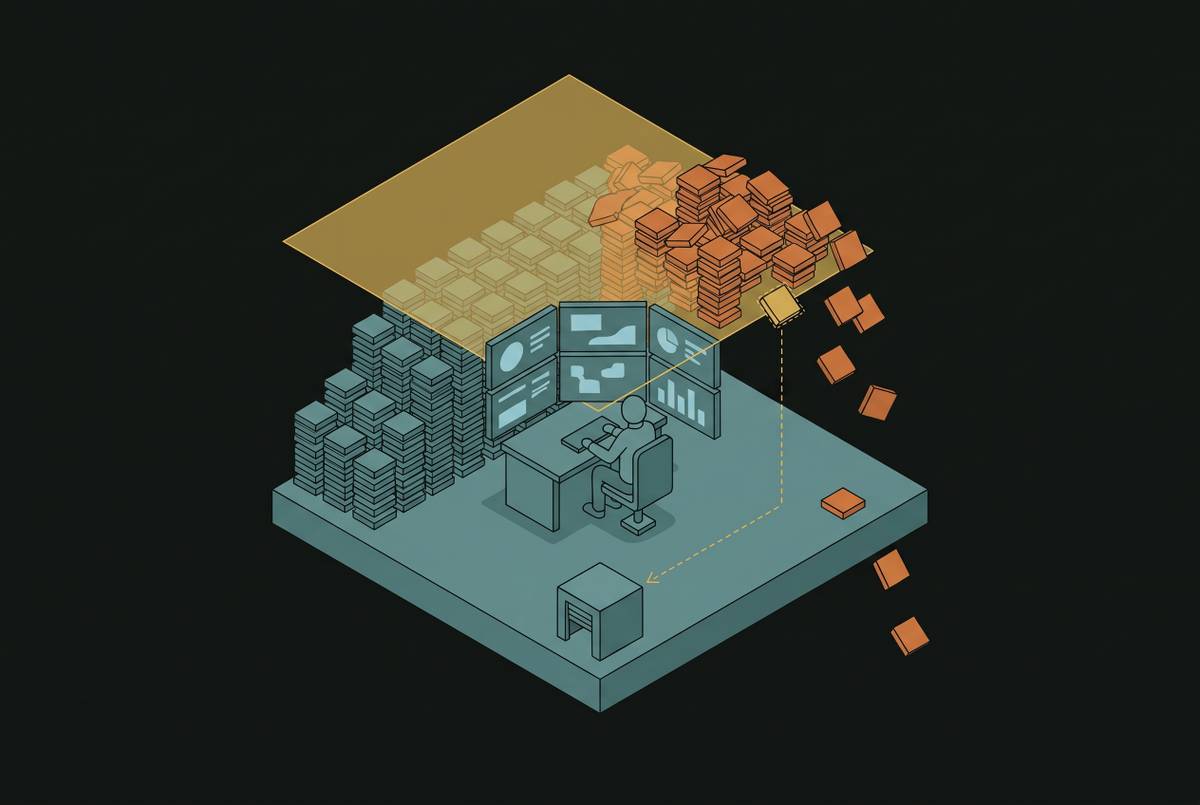
Basic motion detection continuously replenishes that workload with triggers from wind, shadows, animals, headlights, and user error, together with genuine intrusion events. Without a way to tell them apart before they enter the queue, each must wait for review. More cameras add more sources of environmental triggers. If those arrivals outpace the operators clearing them, the backlog grows. Staffing affects processing capacity, but it does not change the probability that the next alarm is noise rather than a threat.
Why do monitoring centers fall behind on alerts during high-volume periods?
A surge creates more than a processing backlog. It also places operators in conditions that undermine sustained attention. The UK's National Protective Security Authority has identified the vigilance decrement, in which concentration can begin to decline after relatively short periods of continuous monitoring. Research cited on professional CCTV operators found that they detected roughly half of target behaviors during a 90-minute video review task.
Repeated false signals make it still harder to stay focused because they cause alarm fatigue. When most alerts prove benign, operators become less responsive, and a genuine event can receive the same skeptical, slowed treatment as the noise preceding it. Multiple simultaneous data streams make the distinction harder. Training cannot change the conditions that cause operators to respond this way. The architectural failure is to make scarce human attention the first filter for an undifferentiated flood, leaving the property dependent on both queue clearance and an operator's remaining capacity to recognize the threat.
The time a real threat spends waiting in that queue, and what it means for the property
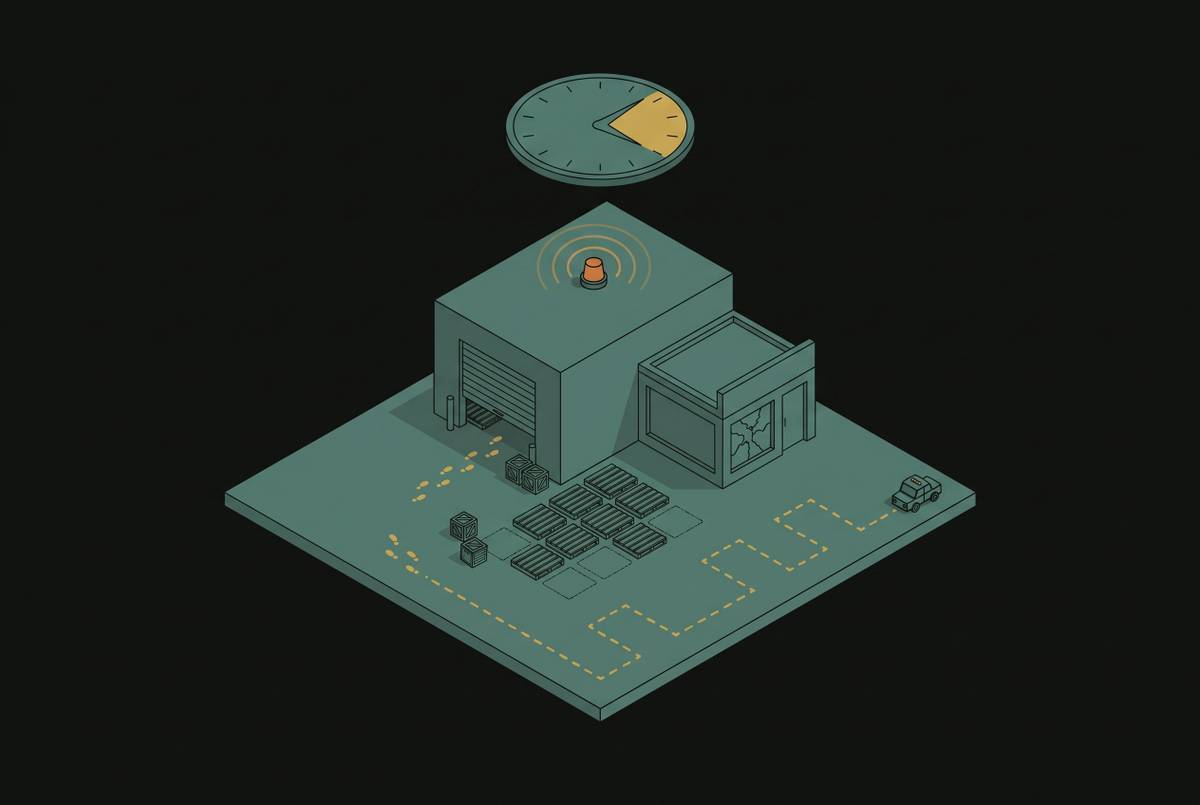
For a retail store, truck yard, or employee parking lot, an intrusion does not pause while its alarm awaits review. The event remains active during that interval. Theft, vandalism, or violence can occur between detection and response, so delayed verification is an interval of exposure. The more alarms that must be reviewed first, the longer that interval lasts. The camera may have detected movement before the monitoring service has worked out what response the property needs.
This distinction also limits what standards compliance can demonstrate. Signal acknowledgment under the UL 827 framing is not the same milestone as a trained human reviewing a verified, contextualized threat. A standards-compliant monitoring center can therefore still leave a meaningful window between receiving a signal and escalating the event. Acknowledgment alone does not close that window. For the property, the relevant delay includes both the time taken to register that a signal arrived and the time spent waiting for false alarms ahead of the genuine event to be cleared.
Why the industry's conventional fixes do not change the queue math
Adding operators increases the number of alarms a center can process, but it leaves the false-alarm proportion intact. Labor costs scale with the workforce while most review effort still goes to benign events. Offshoring changes the cost of that effort. It does not, by itself, change queue depth, alarm composition, or the cognitive effects of reviewing predominantly false signals.
Suppressing alarms takes a different route with a different cost. Muting or deprioritizing a noisy camera reduces review volume but creates a coverage gap, potentially in a high-risk zone. Raising motion-detection thresholds can cut false positives but can also mean fewer genuine events are detected. Neither adjustment gives a motion detector an understanding of what is happening in the scene.
The 2025 UL 827 revision required records of operator training and covered contracted third-party operators. Those changes give the people who oversee monitoring work more control over how it is done. They do not classify incoming events. Better governance and greater capacity can support a monitoring operation, but neither prevents an environmental trigger from taking a place ahead of a genuine intrusion.
How cities have responded to the false-alarm flood, and what that signals to monitoring buyers
Law enforcement policies add an external constraint to the internal backlog. Salt Lake City became the first major U.S. city to adopt verified response in 2000 and saw an immediate, steep reduction in alarm responses. Los Angeles moved to require verification after false alarm calls consumed millions in lost patrol time. The burden shifted back toward alarm verification. A monitoring center's ability to forward a signal was no longer enough to establish that police would respond.
Seattle requires supporting evidence, including audio, video, eyewitness testimony, or a panic button activation, before dispatching. Houston implements non-response after the 7th false alarm from a permitted address and applies non-response to unpermitted alarm sites. Baltimore has in effect blacklisted sites that keep sending false alarms. These policies make poor verification a dispatch risk as well as a source of delay.
However, verified-response policy has not spread consistently. Only a handful of U.S. law enforcement agencies have formally adopted it, and a significant number that tried it later reversed course. The policies nevertheless signal that downstream responders may refuse to absorb unverified alarms, leaving a property facing a fine or no response. Verification therefore needs to be part of the monitoring architecture rather than a capability added only when local rules demand it.
What object-level reasoning by AI agents actually does to a queue before it reaches a human operator
Legacy motion detection measures how pixels change from one frame to the next. When enough pixels change, it generates a trigger without understanding whether the cause is a person scaling a fence or a cloud shadow crossing the ground. Both can become human review tasks. Object-level AI classification instead assigns moving regions to categories such as person, vehicle, animal, or environmental artifact and tracks them across time. That distinction allows environmental activity to be filtered before it consumes an operator's attention.
Behavioral rules then limit which of the classified events should be escalated. Operators can define virtual tripwires and specify the direction of travel that should generate an alert. A crossing of the defined line in the defined direction produces a timestamped clip. Direction gives the classification operational meaning. Wildlife, rain on a lens, headlights, and shifting shadows need not join the queue simply because they changed the image, while the qualifying event arrives with visual context attached.
Instead of accelerating human review of the same environmental triggers, the upstream layer removes that review work before it reaches the operator. Hundreds of nightly environmental triggers can become a short, actionable queue. Human attention is reserved for the filtered events. A genuine intrusion no longer has to wait behind the benign triggers that this layer has excluded, reducing the workload that otherwise delays verification and response.
Why AI filtering and human operator judgment are complementary layers, not competing options
Filtering an event and deciding its response are different tasks. AI agents classify activity and surface qualifying events with context, while human operators retain the escalation decision. A queue made up mostly of meaningful events calls for a different kind of attention than one full of false signals. Each alert has a stronger claim on attention. Dividing the work this way tackles the causes of vigilance loss and alarm fatigue while leaving professional judgment to the operators.
The operator follows a site-specific runbook to decide whether to contact the keyholder, dispatch security, notify law enforcement, or start remote audio intervention. A person in a parking lot at 2 a.m. means something different at a truck yard with a posted no-trespass policy than at a retail property expecting an overnight delivery. The visible object may be the same. Operators use site context and human judgment to decide whether the event calls for intervention and which response fits the property.
What site-specific context means in practice for alarm verification across commercial, multifamily, and industrial sites
At commercial retail properties and employee parking lots, authorized deliveries, cleaning crews, and scheduled maintenance all trigger detected-person events for people who are allowed to be there. Without site-configured schedules, object detection can turn each authorized visit into a false escalation. The backlog then returns in another form. The system has correctly identified a person but has not distinguished routine work from a threat. Schedules, authorized activity, and access zones provide the context needed to make that distinction useful.
At truck yards and industrial perimeters, detection also needs to work with the site's operating rules. Direction of travel relative to the perimeter, authorized vehicle-entry windows, and zone-specific access distinguish scheduled deliveries from intrusions. A generic tripwire can generate false escalations even when object classification is accurate. The system must therefore be set up to tell which movements at that location call for a response, since some vehicle crossings are more suspicious than others.
Multifamily monitoring uses resident-specific zones, including package rooms, amenity spaces, and parking structures, to put events in context. Its escalation workflows pair AI-detected events with live operator verification, audio intervention, and law enforcement notification under site-specific procedures. Different spaces require different response rules. For industrial and energy sites, configuration also supports monitoring where on-site guards cannot economically cover hundreds of distributed well pads or pipeline rights-of-way.
What a monitoring architecture built around queue math actually requires from a buyer's standpoint
For buyers, the evaluation should begin with where filtering occurs. Does AI classification happen before signals enter the queue for a human operator, or does an operator have to review everything a sensor triggers? Placement determines which workload reaches the operator. An AI capability applied only after unfiltered signals have entered human review does not provide the same protection against backlog as filtering that prevents those signals from entering.
The next question concerns elapsed time from a genuine event to a trained operator reviewing a verified, contextualized escalation. Signal acknowledgment is a different measurement and should not stand in for that interval. Buyers should assess verified-threat response time against the legacy average, rather than treating fast receipt of a signal as evidence of fast intervention. The measurement must follow the threat through review. Otherwise, a prompt acknowledgment can coexist with a queue that leaves the property waiting.
Protocol specificity and escalation accountability complete the assessment. Buyers should establish whether site schedules, authorized activity, and zone-specific rules are configured into the AI's decision logic, and whether the operator's response path fits the property. A generic response protocol can also leave operators unsure when to contact the keyholder, use audio deterrence, or call for law enforcement dispatch.