How Triage Priority Logic Collapses When Monitoring Centers Face Simultaneous Alert Floods
Alert floods bury critical events, and only correlation can fix it.

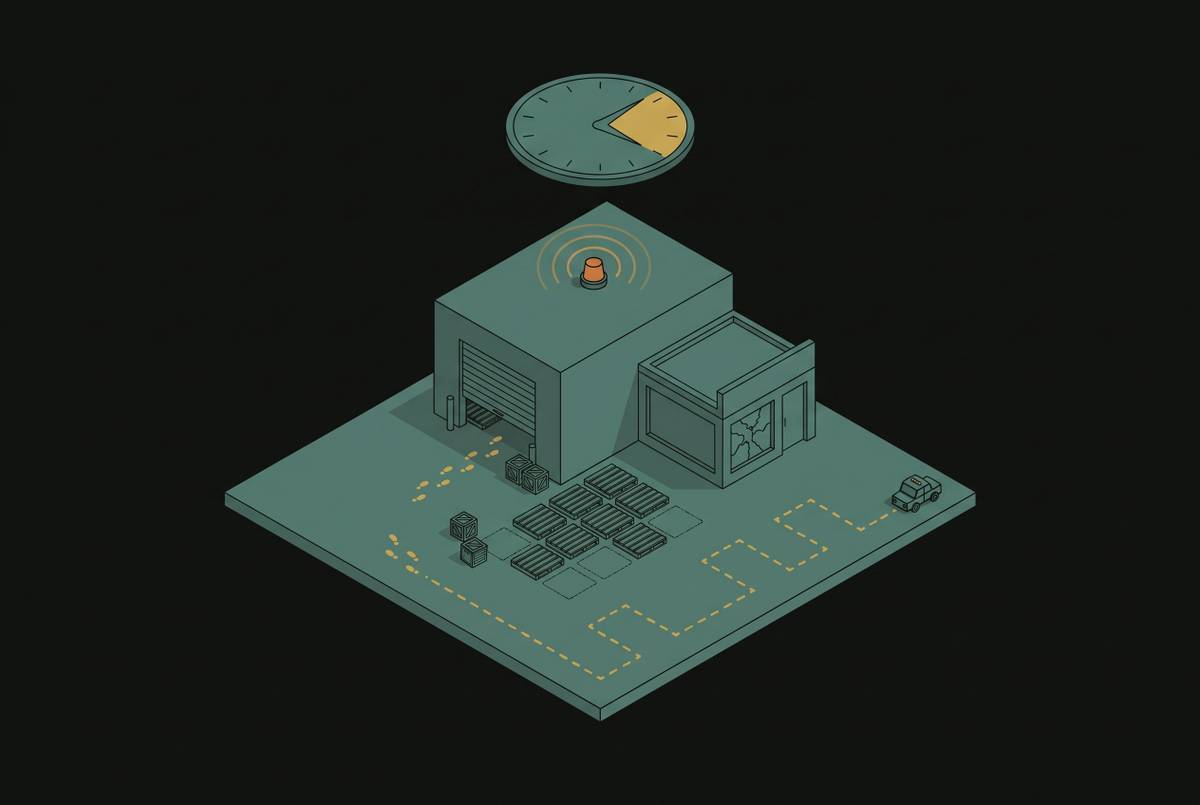
Alarm response time failure in traditional video monitoring centers occurs when incoming alerts exceed operators’ capacity to understand and act on them. Triage then follows the order in which alerts arrive, leaving the event with the most at stake buried among signals that matter less. Repair requires correlation and consequence-based routing before human review.
How a monitoring center's triage logic is supposed to work
Priority-based triage ranks alarms by what is at stake so that operators deal with the most urgent risk first. An operator receives an alert, assigns or inherits its priority, and acts according to that ranking. Context determines the order of attention. The sensor type, location, time of day, and prior activity help distinguish a condition requiring immediate intervention from one that can wait.
The ISA-18.2 alarm management standard defines a valid alarm as one requiring a timely operator response. A notification that requires no such response is noise. That distinction gives the priority hierarchy its purpose. Defined priorities reflect both consequence severity and the time available to respond. Each alarm therefore implies that an operator can read it, understand it, and act before its response window closes. The model depends on a hidden assumption that the arrival rate never exceeds the operator’s processing rate.
Why do monitoring centers fall behind on alerts before a flood begins?
Legacy monitoring centers already have queues full of false triggers when alerts start to surge. The ASU Center for Problem-Oriented Policing’s research compiled for the DOJ identifies the vast majority to nearly all alarm activations reaching police as false. That finding is specific to alarms reaching police. It nevertheless establishes how much noise can survive the alarm-response workflow. False activations are a baseline condition.
Environmental changes help sustain that baseline. Wind, rain, temperature changes, and shifting sunlight can trigger detection, as can animals crossing sensor zones and routine activity involving deliveries or cashiers. Detection alone does not establish which event is threatening. Operators must work out which event is threatening, again and again spending time on conditions that need no action. When most of the queue looks like this, operators learn to dismiss what they recognize.
Stale alarms remain active after acknowledgment without the underlying condition being resolved. Their persistence makes abnormal states look ordinary. Low-consequence conditions marked as urgent further weaken the relationship between a priority label and a necessary response. Before a flood begins, the system is therefore already brittle, with attention consumed by noise and the ranking mechanism less informative than its design assumes.
The mechanics of how a simultaneous alert flood inverts triage priority
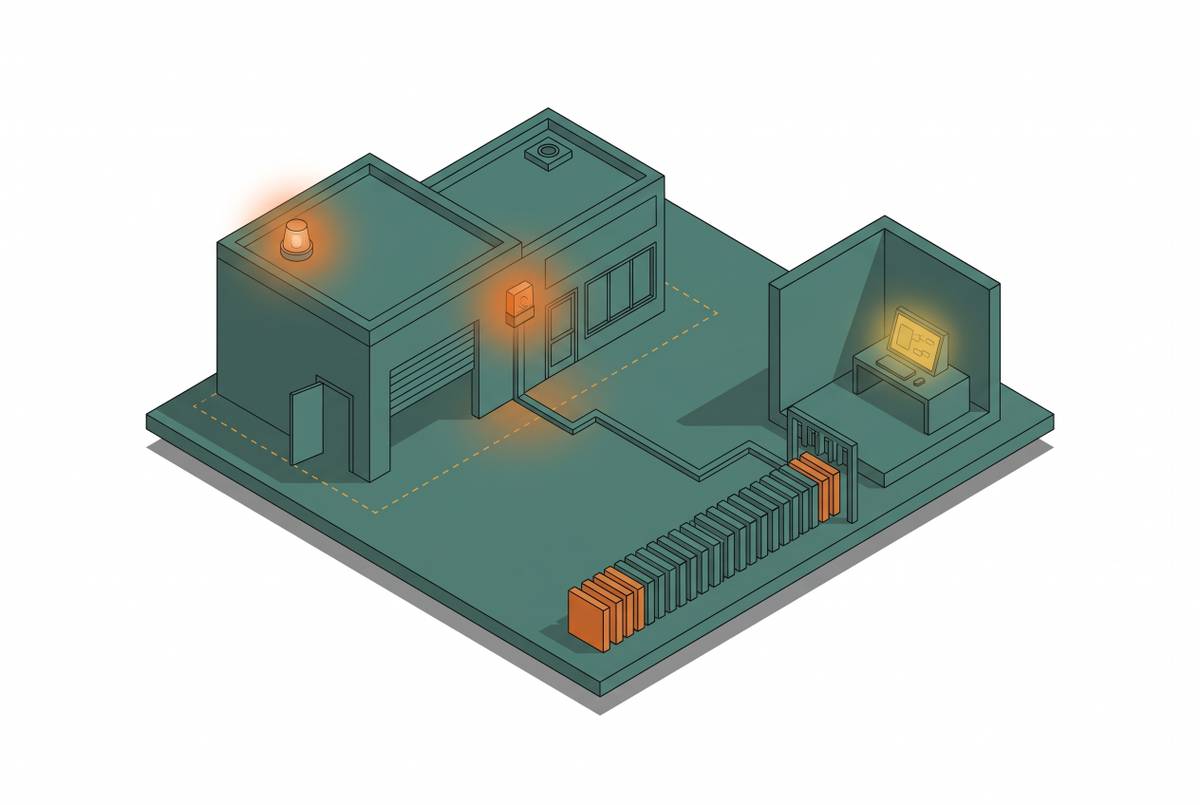
A simultaneous flood begins when alerts arrive faster than operators can diagnose, decide, and act. A single underlying event can produce many signals because downstream conditions each trigger their own notification. The first detection may be diagnostically useful. The alerts that follow, however, can describe symptoms of the same cause without identifying that relationship. Without correlation, the monitoring system treats each symptom as an emergency of its own that a person must review.
The sequence creates two routes to inversion. In one, a consequential event arrives amid or after a cascade of lower-consequence alerts and takes its place behind them. In the other, the originating alert arrives first but loses visibility as its own echoes fill the display. These routes differ in chronology, but both sever attention from consequence. The earliest alert is not necessarily the first understood, and the most dangerous event has no guaranteed advantage over the signals surrounding it.
Consider the shared upstream failure described in the alert-storm pattern. It triggers dozens of downstream alerts within seconds, while responders pick different symptom alerts and look into them at the same time. Their effort fragments around one cause. The originating alert scrolls off-screen, and responders keep looking into their alerts without seeing that they belong together. Detection has succeeded repeatedly, but triage has failed to turn those detections into an incident that someone can understand and address.
For the operator, this becomes a stack of apparently independent obligations. Flat severity gives the originating event the same standing as its echoes, while continued arrivals leave less time to investigate any one item. Acknowledgment begins to substitute for understanding. Operators work through alerts by when they arrive and how familiar they look. A high-stakes event at position twenty remains there because the system has no reliable mechanism to promote it.
The ISA-18.2 standard identifies alarm flooding during process upsets as a failure mode in which hundreds of simultaneous alarms overwhelm triage, critical alerts are missed, and incidents escalate. Its industrial setting differs from physical security, but the relevant constraint is the same finite capacity for human interpretation. Instant detection does not imply timely response. The gap opens after detection, when people must make sense of signals one by one because the system has not brought them together into one event. More cameras, sensors, and detection points can widen that gap, because comprehensive instrumentation without correlation gives a large failure more ways to obscure itself.
How chattering alarms and priority inflation accelerate the collapse once a flood begins
Chattering alarms trigger and clear again and again within seconds as activity moves near a detection threshold. Each repetition creates another demand for attention without necessarily adding information. The interruption is small but recurrent. During a flood, those bursts consume the same scarce processing capacity needed to identify a consequential event. Chattering therefore increases workload precisely when the system can least afford redundant signals.
The ISA-18.2 implementation guide identifies chattering as a failure mode that “trains personnel to ignore entire alarm categories — including legitimate critical alerts”. This learned response predates the surge. Once the queue fills, an operator has reason to quickly dismiss a category known for noise, even though it may now contain a real event.
Priority inflation disables the other main aid to navigation. The same guide describes the problem plainly as “when everything is critical, nothing is”. If operators have learned that urgent tags often flag conditions with little at stake, they cannot suddenly trust those tags during a flood. Chattering adds competing demands while inflated priorities remove the means of choosing among them, leaving even a skilled operator without a dependable route to the highest-stakes event during its response window.
What sustained alert overload does to the operator making triage decisions
An alert storm is a sudden event, while alert fatigue builds over time as people face large numbers of signals that offer little value. Both can lead operators to stop responding to alerts, including genuine threats. The distinction remains operationally important. A storm overwhelms current capacity, whereas fatigue changes the habits used to allocate that capacity. When the two coincide, the human decision-maker does not provide an independent safeguard against the failing queue.
Aggressive filtering is a rational adaptation to that environment. An operator who investigates every familiar nuisance in full cannot keep pace with fresh arrivals, so rapid dismissal becomes a way to preserve workflow. Low- and medium-severity alerts become easier to pass over, even when the priority designations themselves are unreliable. The operator’s attempt to manage workload thus compounds the system’s loss of consequence-based ordering.
Vectra AI’s 2026 alert fatigue guide reports that 63% of security alerts go unaddressed. That security operations finding describes a failure pattern related to that of traditional video monitoring centers. The guide identifies growing uninvestigated backlogs, rising mean time to triage, and dismissal without investigation as signs of degraded decision-making.
Sustained pressure also produces burnout, and job rotation or additional staffing can redistribute the burden while leaving the demands that create it intact. Even where an operator develops the site knowledge to navigate a noisy queue, that knowledge does not remain available when the operator leaves.
Why the standard industry workarounds don't restore triage order and sometimes make it worse
Muting a noisy camera solves a real and immediate workload problem. Alerts from that source stop competing for attention, making the remaining queue easier to manage. The reduction has a coverage cost. True alarms from the same source disappear with the false ones, so a quieter display does not establish that the monitored environment is safer. The tradeoff remains hidden until an event requires attention on the muted feed.
Adding offshore review seats addresses cost and capacity, but headcount alone does not create consequence-based judgment. An operator needs enough site context to distinguish normal activity from an anomaly. Location is not the deciding factor. Without that knowledge, more seats can work through more signals while still leaving the risks in the wrong order. When people leave often, it is even harder to retain the knowledge of each site that manual review needs.
Blanket state-based suppression likewise has a place in process industries when changes in state are predictable and have clear bounds. Security monitoring presents a different constraint. Shift changes and deliveries can create both high noise and opportunities for incidents, so disabling alarms during those windows can remove the signals that require investigation. Consequential events lose access to attention through exclusion.
The Security Industry Association’s Technology Insights (Fall 2026) says that more alarms, customers who expect more, trouble staffing teams, and demand for verified response are pushing the industry beyond reactive workflows built for the analog era. The workarounds change staffing or visibility, but they do not reliably connect related signals or rank the resulting incidents by consequence.
What structural triage repair actually requires, and where the industry is moving
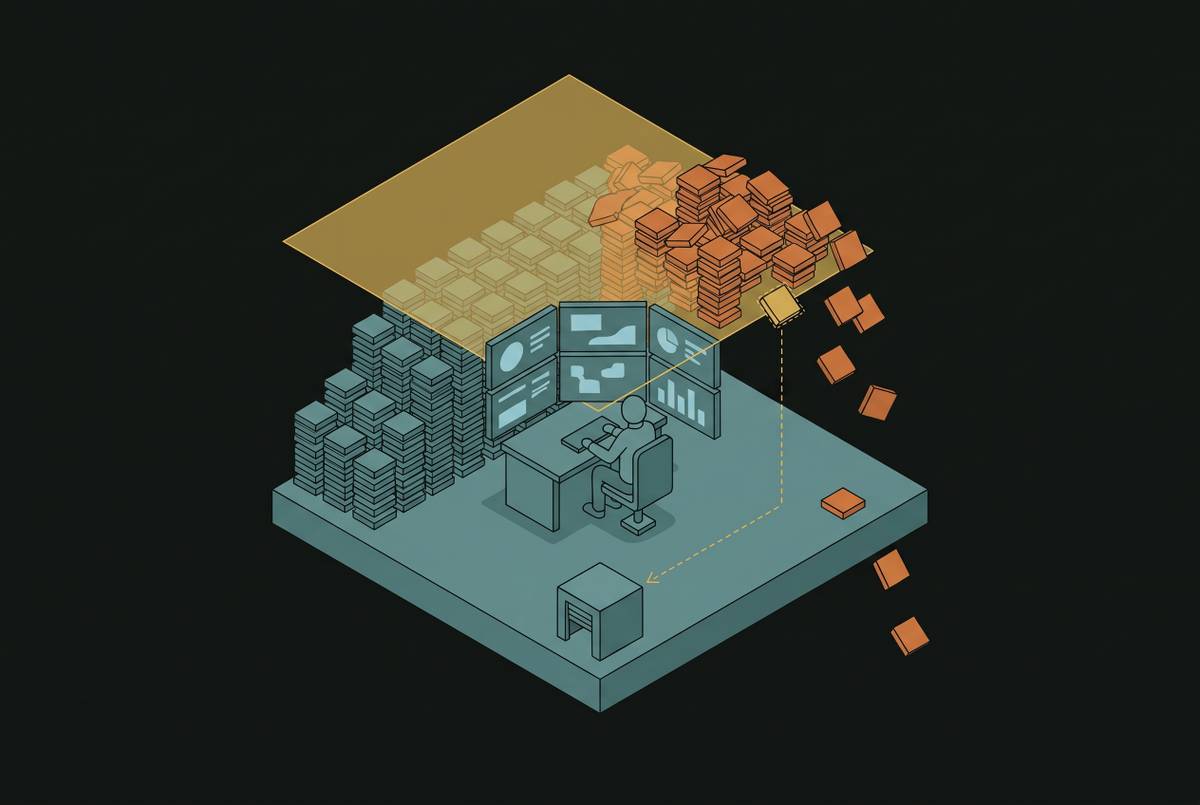
The alerting layer needs a model of dependencies so it can correlate downstream symptoms with their upstream cause and present fifty echoes as one contextualized incident. This is not blanket suppression. The signals remain represented by the incident that explains them, rather than disappearing because their source is inconvenient.
The resulting incidents must then be ranked by consequence and the time available to act. The ISA-18.2 standard’s advanced alarm design stage uses dynamic alarming and consequence-based prioritization to surface events in the order they require action. Priority becomes a system function. For monitoring, context must guide routing before an operator starts working through detections one by one. Otherwise, the human remains responsible for reconstructing both the event and its urgency under flood conditions.
An AI-native model follows from those requirements by replacing alert-then-human-review with a detect-decide-verify loop before the queue forms. Agentic triage reasons about context and resolves routine activity, while trained operators handle escalated, ambiguous, and high-stakes cases. Human judgment remains central to consequential decisions. The appropriate autonomy model retains humans in-the-loop or on-the-loop under strict policy constraints, reserving out-of-the-loop actions for narrowly scoped, low-consequence tasks. Department of Defense Directive 3000.09 governs autonomous and semi-autonomous weapon systems, so its autonomy framework serves as an analogy for civilian physical security here.
Signal quality is the test of this architecture. Vectra’s analysis notes that declining alert volume alone has not closed the gap between generated alerts and meaningful investigation. An AI-native service addresses the inversion structurally only when correlation, consequence-based routing, and human escalation operate before that waiting begins. For events the system can resolve confidently, the queue never forms. For those requiring judgment, the highest-consequence event reaches an operator first, with context and within the response window, rather than inheriting position twenty in a chronological stack.