Real-Time Threat Verification Gaps That Let Cargo Thieves Work Undetected at Unmanned Freight Yards
Automated verification of carrier identity and schedules can stop thefts before trailers leave.
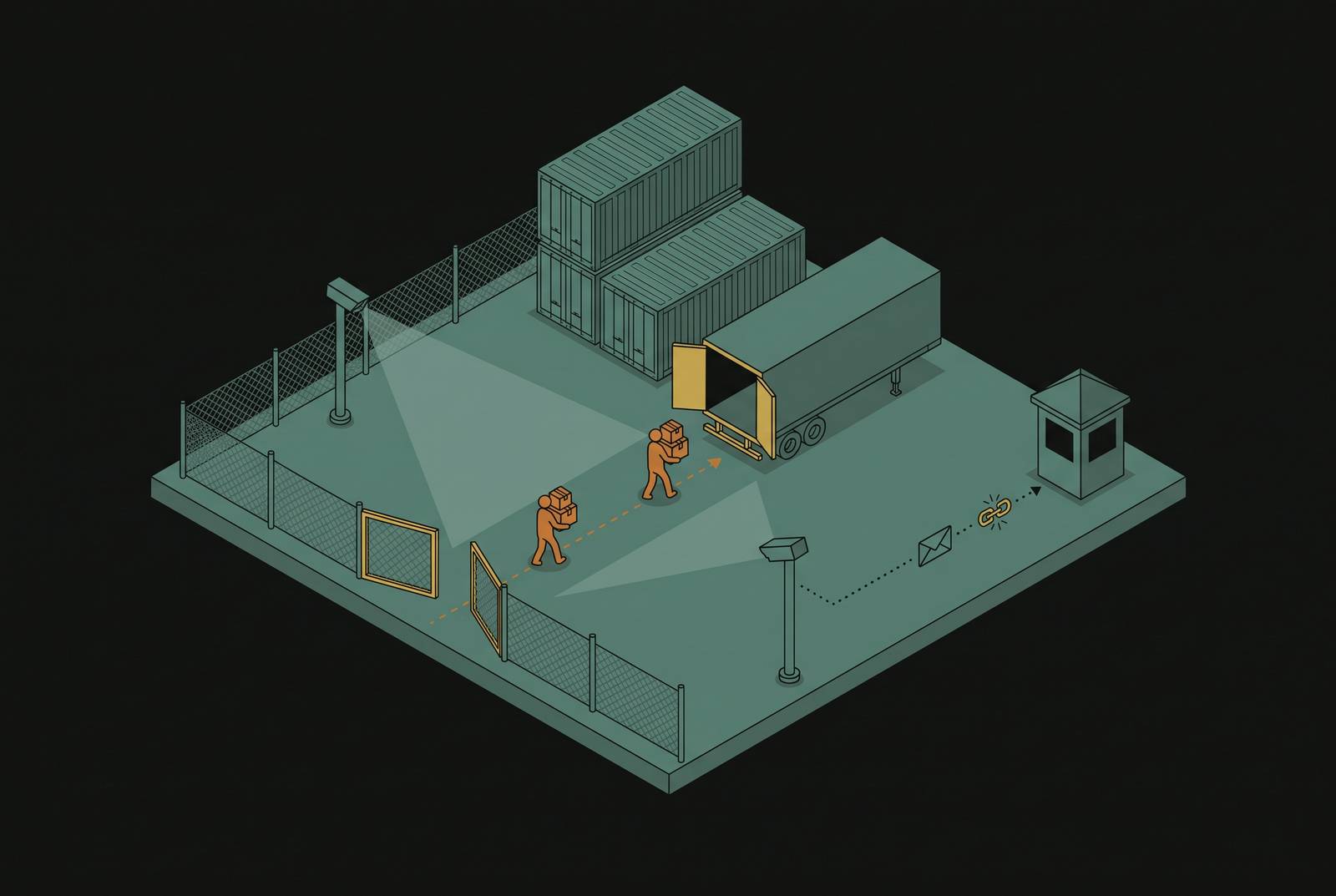
AI-augmented remote video monitoring for truck yards and freight facilities must check what happens against yard schedules, carrier identities, and authorized movements before passing threats to human operators. At unmanned freight yards, cameras alone cannot tell whether the movement they detect is theft. The effective architecture combines contextual AI review, human judgment, and a predefined response fast enough to intervene before a trailer leaves.
Why freight yards are losing cargo to thieves who already know the schedule
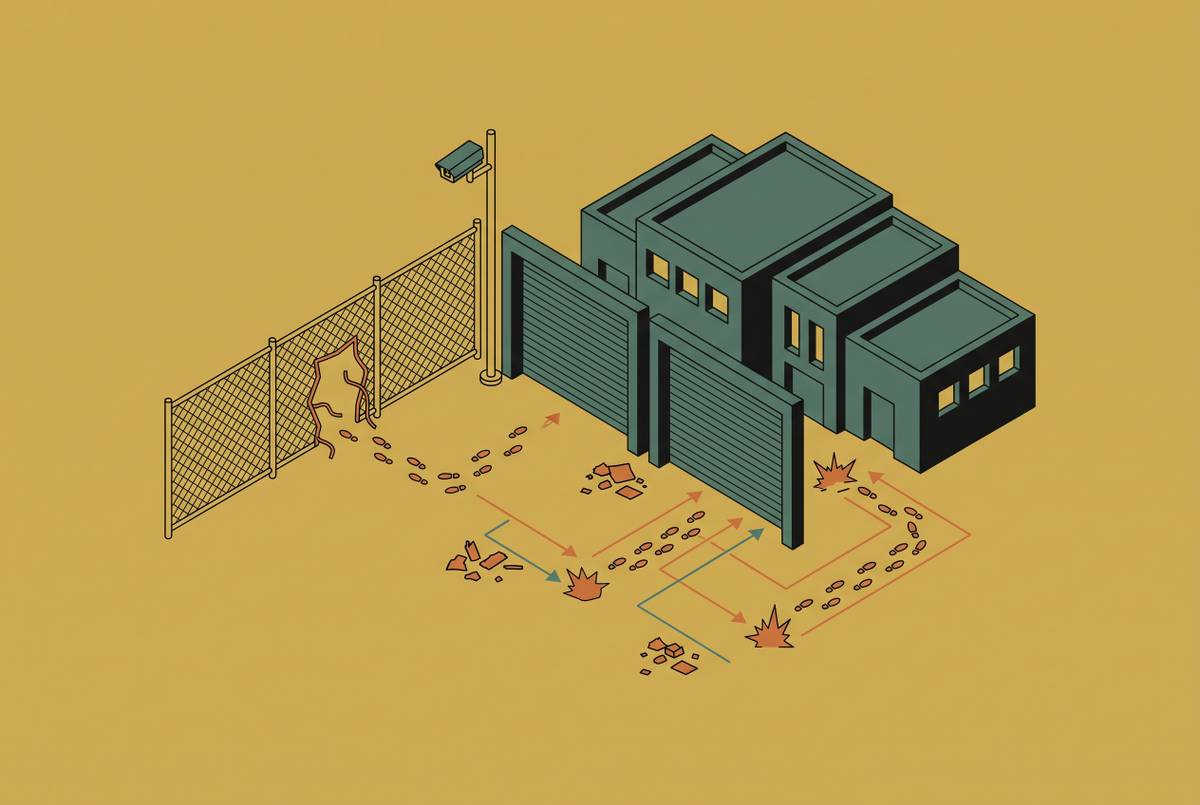
Organized cargo thieves start their work before they enter the yard. They watch schedules, find out which trailers hold valuable freight, and plan to arrive when fewer people are watching. That preparation changes what security must accomplish. A camera can show a tractor approaching a loaded trailer without establishing whether the pickup is authorized. For a crew that has already selected its target, the interval between that image and a verified response is usable working time.
CargoNet's 2025 annual analysis shows confirmed theft incidents rising at a fraction of the rate that dollar losses rose. This suggests that thieves are choosing their targets more carefully as well as making more attempts. Overhaul's 2026 report identifies enterprise computing hardware, semiconductor components, and AI equipment as cargo whose value can make a single undetected removal a high-six-figure event. The exposure is concentrated in individual movements. Missing one strategically chosen pickup can therefore be costly even where most yard activity is legitimate.
This theft profile makes verification speed the central security problem. Passive infrastructure does not establish whether an arriving carrier has a right to remove a particular trailer. Seeing a pickup also may not give an operator a reason to step in. The decisive event is a verified threat reaching someone who can respond while the trailer is still inside the yard. A monitoring model that reaches that decision only after departure has documented the loss without interrupting it.
Why freight yards structurally give thieves the time they need
Trailer yards, cross-docks, and unattended drop lots have predictable dwell time, wide perimeters, and few staff on duty overnight or on weekends. The usual flow of carriers also helps an intruder because a tractor that staff have never seen before can look like it belongs. These conditions reinforce one another. A crew that has planned ahead can pick a trailer that will stay parked, arrive when few staff are on duty, and move through the yard as if doing ordinary work. Slow verification gives that sequence room to proceed.
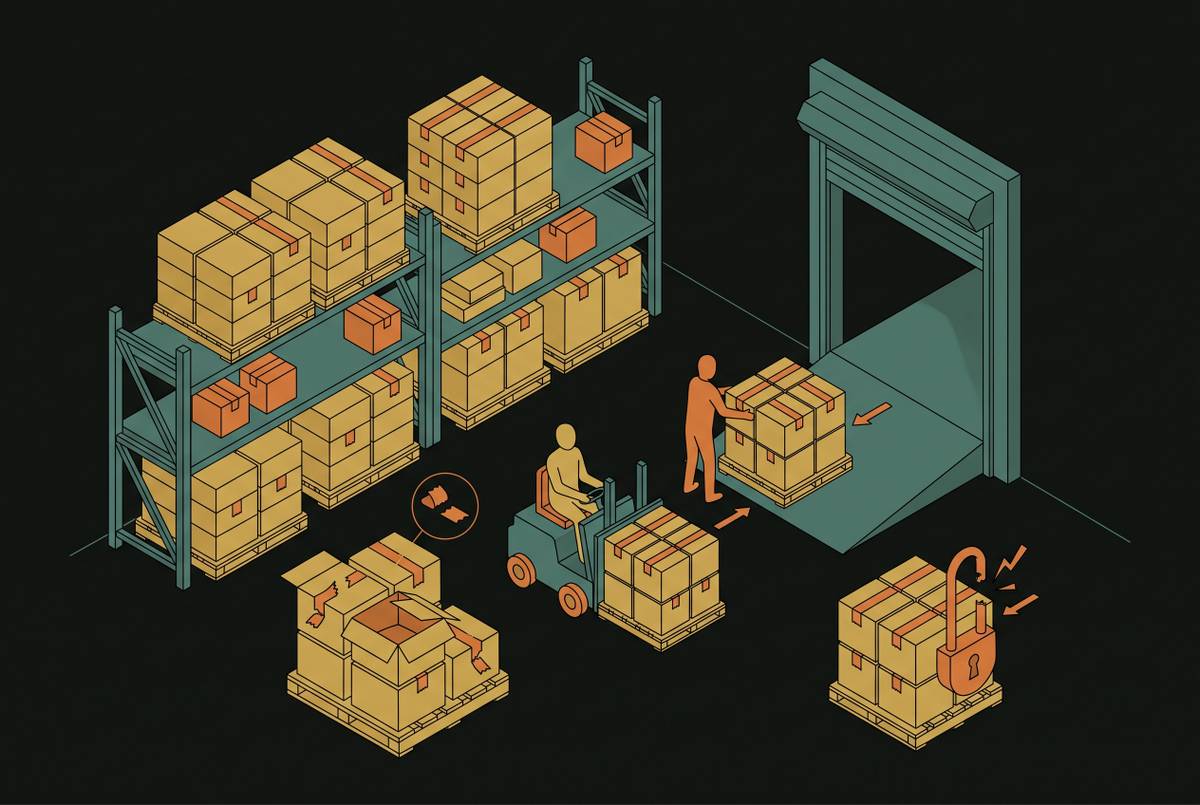
Drop-and-hook operations extend the opportunity across long idle periods. A loaded trailer dropped Friday evening may not move until Monday, leaving an interval in which a crew that knows its contents can choose when to act. The trailer's dwell time and the monitoring delay play different roles. The first provides the opportunity to select an arrival time, while the second provides time to complete the removal after activity begins.
Wide perimeters further complicate that response because activity can develop at multiple entry points. When monitoring staff spend minutes checking what is happening at one gate, they have less time to watch movement elsewhere. Meanwhile, the visible sequence of a tractor arriving, coupling to a trailer, and departing looks the same whether the pickup is legitimate or fraudulent. Motion detection therefore produces noise from the very activity that needs close discrimination.
Deception makes that visual ambiguity more difficult to resolve. Overhaul found that in a large majority of thefts of high-value technology shipments, thieves used methods that included fraudulent carrier identities, double-brokering, and falsified documentation. Physical entry can consequently appear authorized until an identity mismatch is found. CargoNet's Q2 2026 data shows that estimated losses more than doubled even as the number of incidents fell. That pattern is consistent with the growing financial exposure from planned removals of high-value loads, rather than a problem measured adequately by alarm or incident volume alone.
How legacy monitoring creates the verification gap thieves rely on
The legacy verification gap begins with the order of operations. Every alarm enters a human queue before anyone establishes what it means. At a busy freight yard, routine carrier arrivals, employee check-ins, wind, and wildlife can all generate alerts that do not require intervention. Benign activity dominates the operator's workload. When nearly every alarm proves harmless, the queue can acquire a low sense of urgency just as a genuine theft enters it.
The operator then faces an information problem. A raw alarm may arrive without the receiving schedule, dock activity logs, or an expected-carrier record against which to compare the tractor. The image alone cannot establish pickup authority. Without those records, the operator has to judge a drop-and-hook by how suspicious it looks, with no way to check whether it is authorized. Fraudulent pickup schemes take advantage of this by making the pickup look legitimate.
Shared monitoring capacity compounds the uncertainty. Operators who watch dozens of feeds from several sites at once must split their attention, so routine work at one freight yard competes with events elsewhere. More headcount can change the available capacity without changing the sequence. If a human still has to inspect every motion trigger before contextual verification starts, the center keeps using skilled staff to find out which alarms need their skills. The bottleneck remains part of the workflow.
First, an operator must reach the alarm, then establish enough context to judge it, and only then initiate a response. The trailer can continue moving throughout that interval. By the time the operator recognizes a genuine threat, the crew may already be approaching an exit. Diagnosing the workflow therefore requires assessing both how quickly the system detects motion and how much unresolved work it places between detection and action.
Why site-specific context is the missing ingredient in freight yard alarm verification
A freight yard's definition of normal depends on its operating plan. Scheduled receiving windows, authorized carrier lists, dock assignments, and expected departure times show what should be happening at each place and hour. Normal is specific to the site and time. An arrival at 2 AM on a Tuesday may fit the plan, while similar movement on a Saturday may fall outside it. The camera image cannot supply that distinction unless the monitoring process also knows the documented pattern.
Generic motion rules discard this operational difference. They can treat a known carrier arriving on schedule much like an unknown tractor arriving outside any receiving window. An event that falls outside the documented pattern needs a closer look, though that alone does not prove theft. Identity claims require comparison with authorized records. The falsified carrier identities and transportation documents described in the same report make real-time cross-referencing essential because a plausible-looking arrival may still be unauthorized.
For a trailer yard with rotating carriers, the monitoring plan must therefore include carrier-identity verification and dock-activity monitoring as core protocols. Those protocols must be documented and loaded before an event occurs. Preparation changes the work required during an alarm. An operator who knows that the janitorial crew is scheduled, can compare an intrusion alert with the camera view, and can check a tractor against expected carriers has a basis for reducing decision time from minutes to seconds.
That advantage depends on maintenance as much as initial setup. Schedules, authorized identities, and access exceptions must be up to date and ready to check as soon as an alarm arrives. Most traditional monitoring contracts do not even scope this information requirement, leaving generic procedures to stand in for yard-specific knowledge. Any architecture intended to close the gap must make that knowledge part of every alarm review, rather than a resource retrieved only after an operator becomes suspicious.
How AI-augmented remote video monitoring can verify threats at truck yards
AI agents change how the system works when they use what they know about the yard before an alarm reaches a human operator. Their role is not merely to attach an AI label to motion detection. The distinction is between flagging activity and reasoning about whether that activity fits the site's operating plan. The first review must already have the schedule, carrier list, and authorized-activity patterns available. Otherwise, automation simply moves an unexplained signal toward the same human bottleneck.
A tractor arriving at 2:14 AM illustrates the required reasoning. An agent can evaluate the arrival against the receiving window, compare the presented carrier identity with the expected list, and consider whether dock activity shows freight moving out or in. Each comparison answers a different authorization question. Together, they provide a basis for resolving routine activity or escalating a discrepancy before a human begins reviewing it.
The contextual filter also changes which events reach operators. Activity that matches known-good patterns can be resolved before human review, while events the agent cannot resolve require escalation with the relevant context. An unresolved event is not automatically a confirmed theft. For deceptive pickups, however, a mismatch between the presented identity and the authorized-carrier record provides a concrete reason for intervention at arrival, before coupling begins. That is a different capability from recognizing an unauthorized removal after the trailer has departed.
Human operators then retain the consequential decisions. Their work includes initiating a voice challenge, coordinating a law enforcement call, or authorizing a gate hold. This division depends on the quality of the preceding contextual review. Its purpose is to bring a trained person into the event with enough information and enough time to act. Speed is therefore not an incidental benefit of AI-assisted verification, but the reason for moving the first reasoning step ahead of the human queue.
What the monitoring architecture of a protected freight yard actually looks like in practice
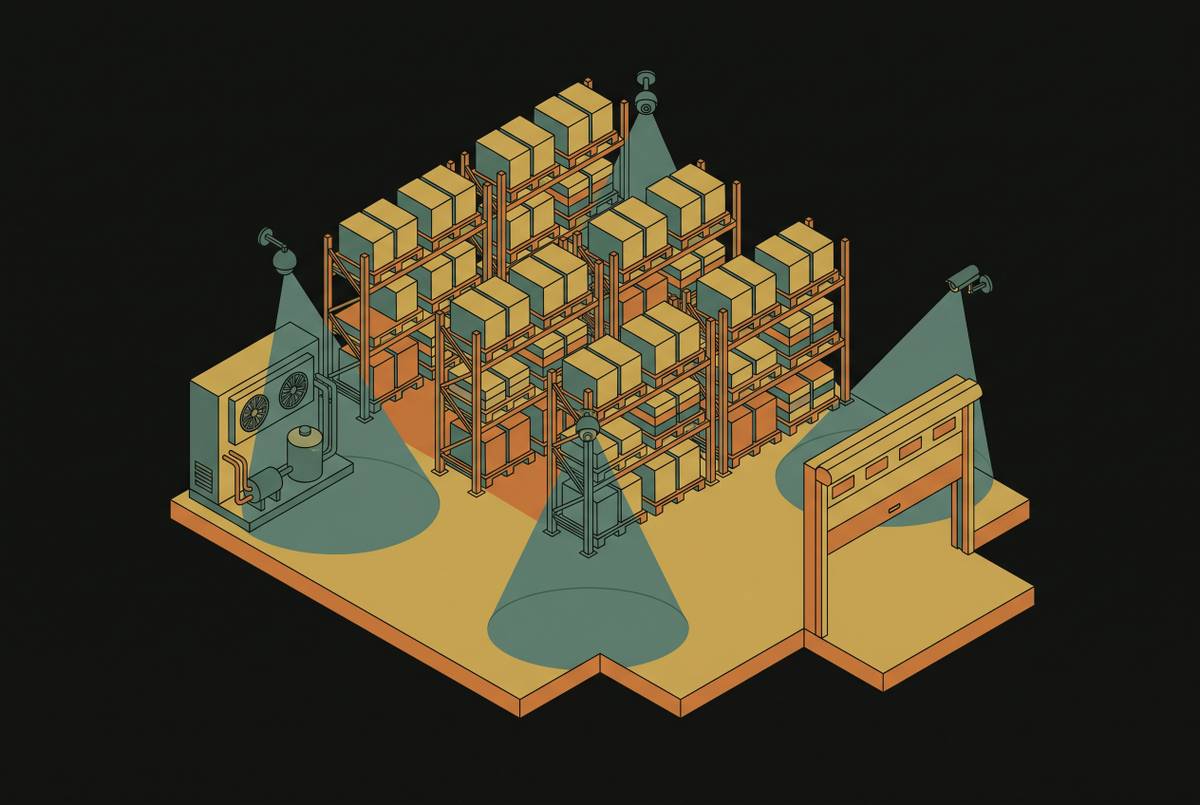
A protected freight yard needs a workflow that connects perimeter coverage, contextual review, human verification, and response sequencing. Each layer has a distinct job to perform. Perimeter coverage must reach across wide lots and multiple entry points so a vehicle can be flagged at the gate and followed from arrival through coupling. That continuity gives the verification process the movement context needed to assess the event as it develops. Camera count alone does not establish that capability.
The AI-agent layer must have the site's information before any alarm goes off. Scheduled receiving windows, authorized carrier identities, dock assignments, and after-hours access exceptions provide the basis for its first review. Without that preparation, the agent cannot reliably distinguish a permitted exception from an arrival that conflicts with the yard's plan. Its handoff should explain the relevant discrepancy.
Human operators must get high-confidence, context-verified escalations with the alarm information, camera view, and recommended response already put together. Verification here must distinguish a supported reason for concern from a final determination that theft is occurring. The operator still exercises judgment about the response. A voice challenge, carrier identity check, law enforcement coordination, and gate hold must fit a predefined freight-yard workflow. A prompt alert can still fail if the operator must invent the response sequence while the tractor is moving.
For buyers, the practical evaluation therefore centers on how long a genuine threat takes to reach a human who has enough context to make an informed decision and respond. That interval must be shorter than the prepared crew's removal time. A system that shows it can detect activity but has yet to show contextual verification and readiness to respond has shown only part of the protection. The decisive standard is whether the full workflow can interrupt the pickup before the trailer clears the gate.