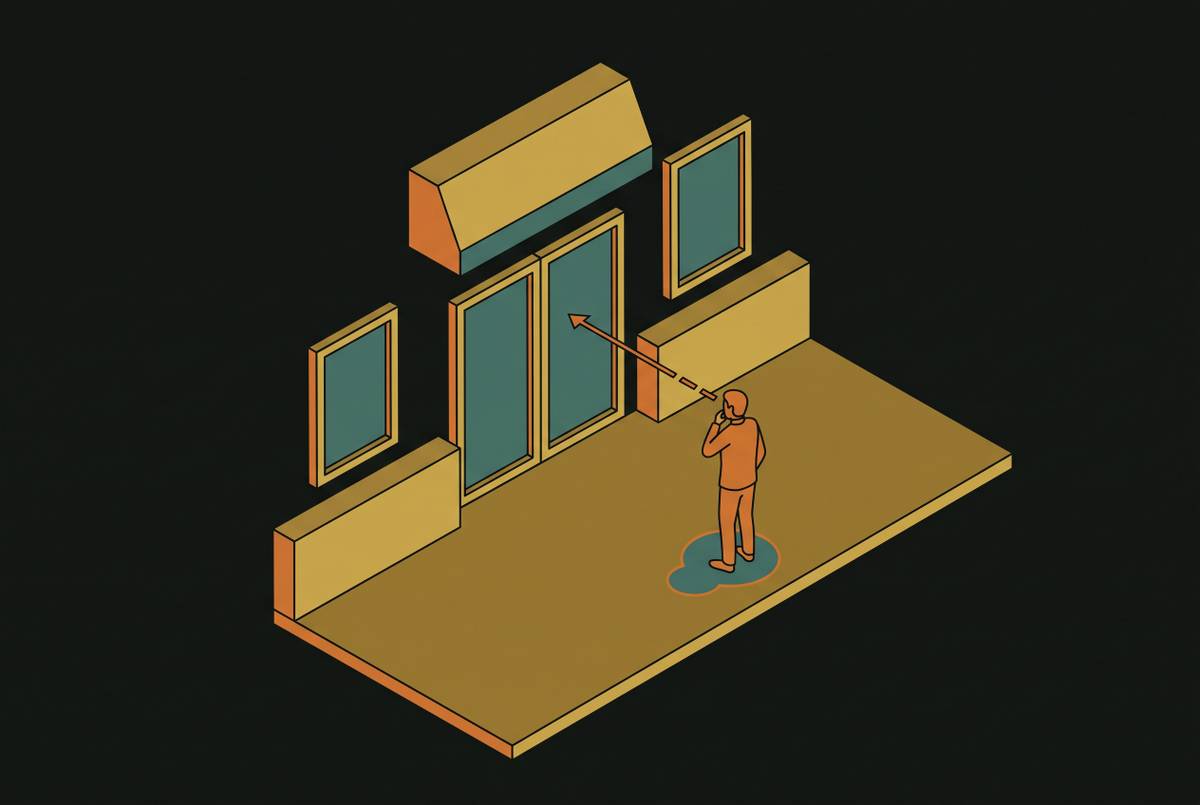
Package Theft and Porch Piracy at Multifamily Properties
Shared entrances and delivery delays make apartments uniquely vulnerable to package theft.
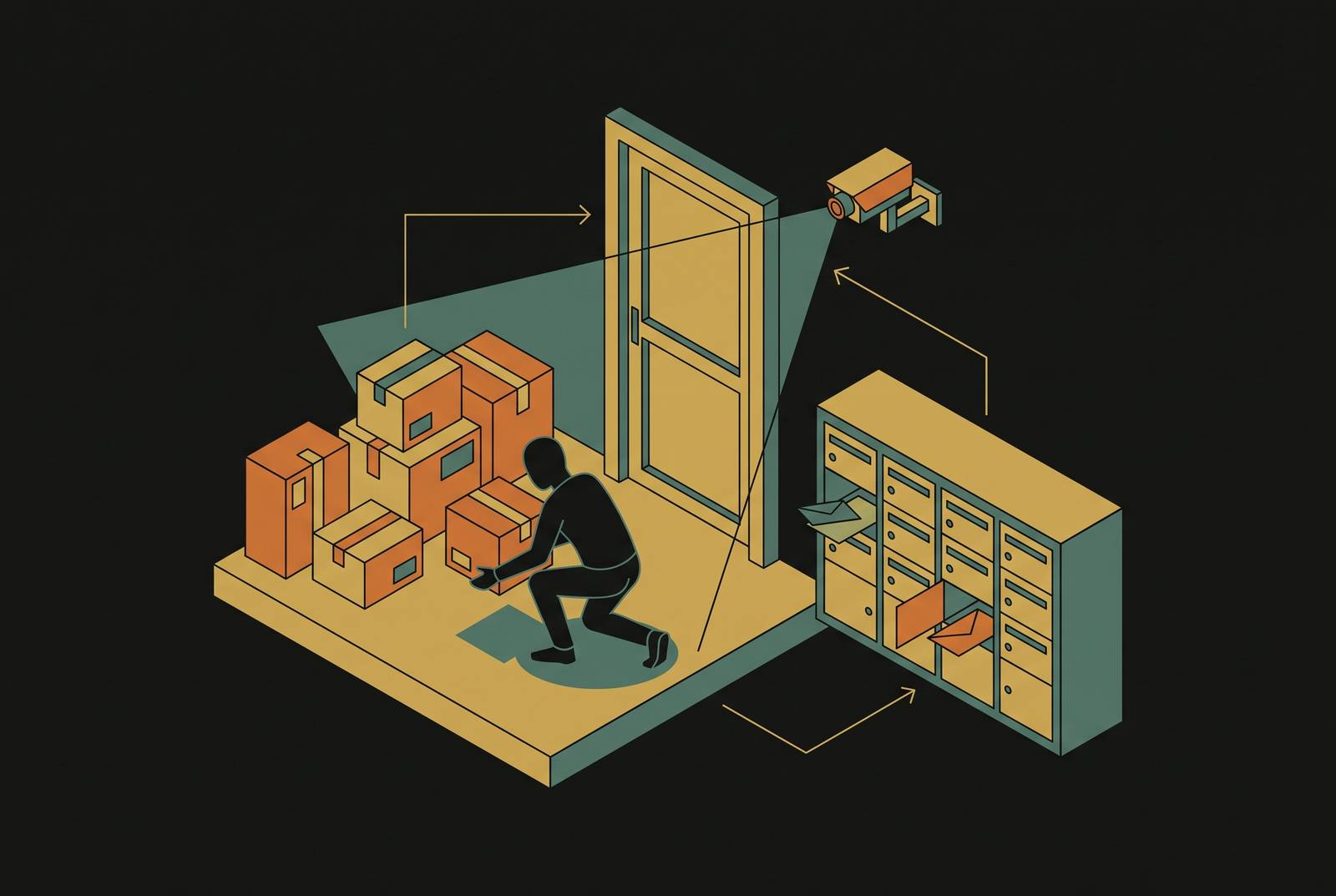
Package theft and porch piracy at multifamily properties are not simply the result of residents leaving deliveries unattended. Shared entrances, concentrated deliveries, and unmonitored common areas create exposure that individual precautions cannot close. What matters most is the property’s security infrastructure, which controls how packages are handled and gets a person to respond to verified threats in time.
Why multifamily properties receive so many packages and why that volume is structurally exposed
The average apartment resident receives three or more packages per week. Across a large apartment building, those deliveries become a continuous operational workload. Packages arrive throughout the day while earlier deliveries wait to be picked up. Smart Package Room notes that the number of packages rises sharply during Prime Day, Black Friday, and Cyber Monday. During those peaks, there must be room for even more packages between delivery and pickup.
The deliveries converge at a few shared points. A single-family delivery is separated from other households’ packages by the distance between homes, while apartment deliveries collect in lobbies, package rooms, and building entrances. These spaces serve everyone passing through.
A locked vestibule or the absence of staff to receive a delivery can prevent a driver from completing the intended handoff. When carriers improvise, packages end up in open common areas outside the designated intake space. The delivery has reached the property, but responsibility for its next movement is unclear. This gap exists before any resident has had an opportunity to collect the package.
How the physical layout of multifamily buildings turns delivery volume into visible, accessible targets
Packages left in common areas can be approached by anyone who has gained access to the building, whether or not that person has a legitimate reason to handle them. Unlike a private porch, a multifamily lobby does not necessarily have a neighbor who recognizes every face. Someone picking up boxes may look just like a resident running an everyday errand. Access and anonymity reinforce each other.
Smart Package Room identifies anonymity as a core structural vulnerability, especially when packages sit unattended for hours while residents are at work. The delay gives an opportunistic thief time to approach an accumulation without drawing attention. Most package theft remains opportunistic, although organized crews make these shared-access weaknesses more consequential. The opportunity does not require a sophisticated operation. A visible package and an unchallenged route to it may be sufficient.
Storage constraints make that opportunity more conspicuous. Traditional package rooms designed for letters and small parcels cannot always contain today’s box volumes, so overflow reaches open shelves or lobby floors. The packages await pickup in a visible, unsecured staging area. The same source identifies poor camera angles, blind spots, and low-resolution footage as common surveillance failures in multifamily settings. Those weaknesses can also leave an incomplete record of who approached the packages and what happened next.
Why resident-level behavior cannot close the structural gap
Delivery tracking and alerts can shorten an individual package’s unattended time. Staying home or asking a neighbor to collect it can serve the same purpose. These responses are rational, but their reach is narrow. One resident’s vigilance does not protect another resident’s delivery in the shared lobby, nor does it change where a carrier leaves overflow. The unit of individual action is smaller than the area of exposure.
Package lockers and secure rooms also depend on conditions that residents do not control. Their protection depends on available capacity, carrier participation, and deliveries actually reaching the secured space. A resident cannot compensate for an intake process that leaves a package outside that process. Reporting after a loss provides limited deterrence as well. Smart Package Room notes that fewer than one in four victims reports theft to local law enforcement, leaving much of the crime without a formal signal back into the building.
Claims place pressure on insurance premiums, while poor reviews can reduce occupancy and make a property less attractive to prospective residents. These costs fall on the operator as well as the recipient. The same source identifies secure deliveries as a top amenity for new renters.
What property-level package security infrastructure actually requires
A property-level response requires controlled intake, carrier compliance, and a documented chain of custody. Each addresses a different break in the delivery process. Physical controls limit who can reach stored packages, carrier protocols tell drivers how to get deliveries into that protected space, and records show what happened between arrival and pickup. None substitutes for the others. A secure room cannot protect a box left outside it, while a delivery record cannot prevent unrestricted access.
The physical foundation is a dedicated, secure package room rather than open shelving exposed to general building traffic. Access is limited to residents holding valid credentials, including a QR code or PIN. Capacity is equally important to that boundary. Smart Package Room notes that systems which function under normal volume can fail during holiday surges, creating particularly exposed periods. When excess deliveries return to the lobby floor, the property has recreated the condition the secure room was intended to remove.
Drivers who cannot or do not engage with the intake system may leave packages in open areas even when a well-designed room is available. The operating process must therefore account for carrier compliance. The secure space and its delivery workflow must work together. Otherwise, the property protects only the packages that successfully enter the system.
A chain-of-custody record completes that process. Timestamped records of packages entering and leaving the space establish who received each delivery, when it arrived, and who retrieved it. Those records help settle disputes and provide evidence when a package is stolen. Without an audit trail, a manager cannot reliably distinguish theft from misdelivery or collection by the wrong party.
Why cameras without active monitoring leave the structural vulnerability open
Cameras record activity, but recording alone does not produce intervention. A camera that captures a theft without anyone reviewing the event in time leaves the immediate threat unanswered. Its contribution begins after the package has gone. That evidence can be useful, but it serves a different purpose from detecting an incident while a response is still possible. Surveillance coverage and active protection are not interchangeable.
The distinction also applies to systems described as monitored. If alarms sit in a queue until the activity has ended, a system described as monitored does little to help while the theft is taking place. Smart Package Room identifies the absence of active observation as a more fundamental gap than common shortcomings in image quality or coverage. Better footage cannot make an unattended event receive attention.
False assurance can make that gap harder to address. Residents and operators may see installed cameras as a sign that someone will respond to suspicious activity in time, even when alarm queues prevent that response. That appearance can suppress demand for a real fix. Speed to a verified threat is therefore more useful than camera count as a measure of intervention capability. A prompt alert can support an audio warning or dispatch while the person is still present, whereas a delayed review cannot recover that opportunity.
How AI-augmented monitoring addresses the queue problem that makes multifamily camera networks ineffective
A large multifamily property generates more visual information than a single operator can meaningfully process in real time. Dozens of cameras cover lobbies, package rooms, parking areas, and entrances, each producing continuous footage. Human attention is the bottleneck in that arrangement. When operators must sort routine activity from possible threats before deciding how to respond, filtering competes directly with judgment.
AI-augmented monitoring separates those two kinds of work. AI agents run continuous inference across feeds, filter out environmental noise and authorized activity, and bring verified events to people for review. Weather, animals, and residents going about their day can stay out of the review queue for activity that calls for a decision on how to respond. Relevant events can include a person in a package room whose presence does not match a resident credential or an unrecognized vehicle at a loading area. The trained operator then evaluates the event and decides what action is appropriate.
Resident access schedules, authorized carrier windows, and normal lobby traffic patterns provide the basis for distinguishing expected activity from an exception. Time alone is not a sufficient test. A resident collecting a package at 11 p.m. is not equivalent to an unauthorized person entering the same space at that hour. Without context, an AI system can reproduce the false-positive burden of traditional monitoring.
This division preserves human control over the response. Every alarm deserves review, but AI performs the filtering rather than the reacting, leaving trained people responsible for intervention decisions. Its structural benefit is to change what reaches the operator’s queue. A verified threat delivered promptly allows an audio warning or dispatch call while the threat remains present, rather than a video review after a wait of 20-plus minutes behind false-positive alarms.
What property operators should evaluate when assessing a monitoring program for package security
For property operators assessing a program, the evaluation should start with the workflow behind the cameras. Operators should check the mean time from an alarm triggering to a human operator reviewing it, as well as whether the service-level agreement applies when alarm volume is at its peak. Average conditions are not the only test. A program must also explain how false positives are handled and whether noisy cameras are muted or remain under review through AI filtering. Reducing the queue by leaving cameras unwatched preserves the underlying gap.
Operators should check whether the program uses the property’s access schedules, carrier windows, and authorized activity or uses the same motion-detection logic for every event. The response protocol should also be explicit. Audio deterrence, on-site staff notification, and dispatch are distinct actions, and the program should document which response follows a verified threat. Even a fast alert leaves the response chain incomplete if no one has set out what happens next.
Records provide a way to examine that chain afterward. Timestamped evidence that alarms received review through a documented workflow, and that verified threats received a response within a defined service-level agreement, can support evidence of reasonable security practice where liability is at issue. Smart Package Room identifies chain-of-custody documentation as critical to resolving disputes over missing packages. These records serve related but different purposes. One establishes package movement, while the other establishes how the monitoring program handled an event.
Operators should check whether the proposed program links secure intake, accountable handling, and intervention in time to act under the conditions their property faces. Those capabilities address both the loss event and the work of resolving it. They also support the secure-delivery amenity that renters increasingly expect, reducing the package problems that feed poor reviews and weaken occupancy.