Smash-and-Grab Robbery Timing and Target Selection at Retail Stores
Crews target stores based on merchandise value, portability, and escape timing, not chance.

Smash-and-grab crews do not pick their targets at random. They follow a selection logic built around merchandise value, portability, and resale potential, and that logic is consistent enough to study and plan against. Jewelry stores, electronics retailers, liquor stores, convenience stores, pharmacies, and designer apparel shops recur as targets because what sits inside them can be grabbed fast, carried out fast, and converted to cash without much friction.
Commodity prices shift that calculus in real time. The Jewelers' Security Alliance's Scott Guginsky points to record-high gold prices as a direct driver of the current wave hitting New Jersey jewelry stores. The price of gold on a given week has a measurable effect on which storefronts look attractive to a crew deciding where to strike next. Guginsky also notes that stolen jewelry gets sold back into the market, melted down, or shipped overseas, and that resale pipeline is part of what makes jewelry such a durable target category in the first place. A ring that can be melted down loses its identifying characteristics almost immediately, which removes much of the risk a thief would otherwise face trying to move recognizable stolen goods.
The targeting has also broadened past the obvious high-end boutique. Mid-size and non-luxury retail, including electronics stores and pharmacies, sits inside the same threat category as luxury jewelers, because the underlying test a crew applies is not "is this expensive" but "is this valuable, portable, and easy to convert." That broader framing matters for how retailers think about their own exposure. A store owner running a modest specialty shop with no obvious luxury inventory can still meet every condition that makes a location worth hitting, and dismissing that possibility on the assumption that only flagship jewelers get targeted is itself a vulnerability.
What reconnaissance looks like before the attack
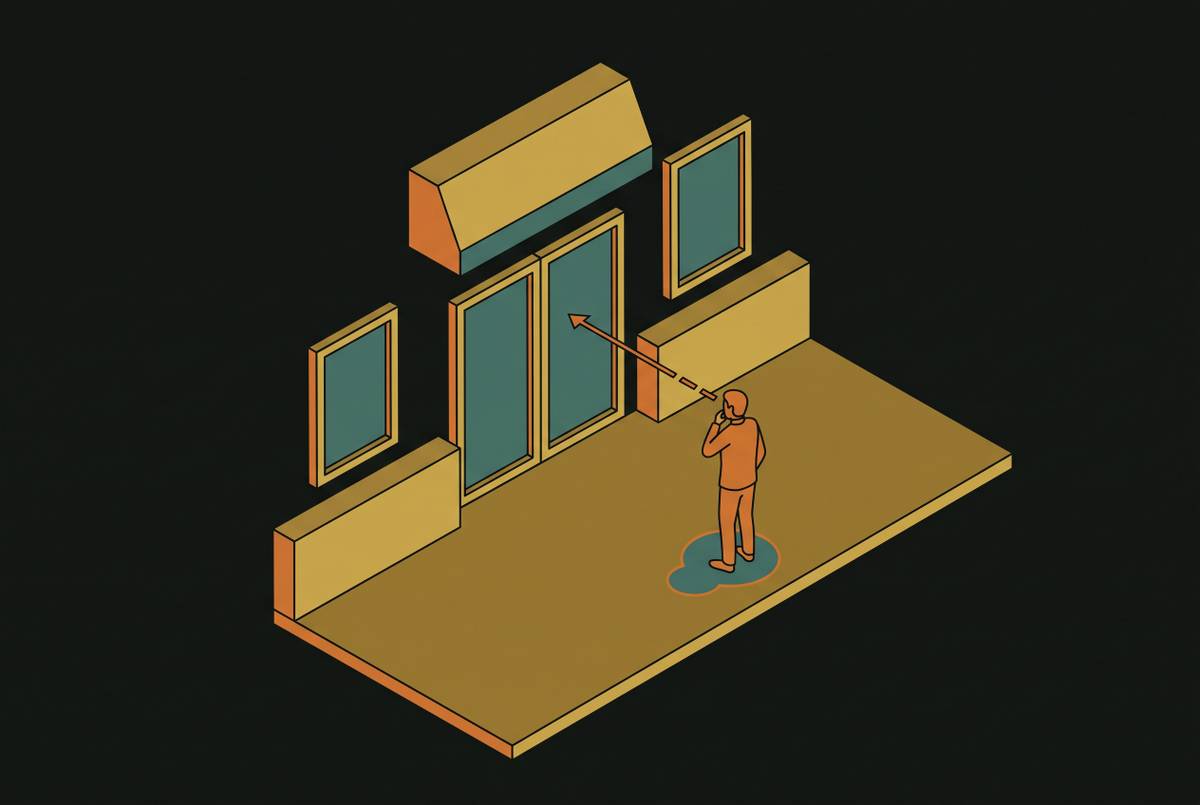
The crime does not begin when glass breaks. It begins days or weeks earlier, when someone connected to the crew walks the site, studies its patterns, and confirms that the target is worth the risk. Reconnaissance is deliberate, and it produces observable behavior a retailer can catch if they know what they are looking at.
Scouts study parking lots, operating hours, exterior lighting, camera placement, and whether high-value merchandise is visible through the storefront glass. That reconnaissance often takes multiple visits, because mapping a store's layout and identifying the optimal point of entry without drawing attention takes more than a single walkthrough. The entire point of the exercise is to look like ordinary customer behavior. A person browsing a jewelry case for an unusually long time, or circling a strip mall parking lot twice before entering a store, does not look like a threat in the moment. It looks like indecision.
Reconnaissance can extend well past the physical storefront and into a target's own public presence. In a Fresno piercing studio burglary reported by INSTORE, owner Monica Garcia had posted photos on Instagram of a visit to Norvoch, a Los Angeles maker of gold body jewelry, just days before the break-in. Garcia believes the thief understood what that merchandise was worth and likely had some connection to the industry itself. That case illustrates something retailers often overlook: reconnaissance is not limited to standing outside a storefront with a notepad. It can happen entirely online, built from a business's own marketing and social media activity, long before anyone sets foot near the building.
The people conducting that reconnaissance are frequently not the same people who carry out the attack. Organized retail crime operations can involve as many as 80 people tied to a single scheme, with distinct roles separating the scouts from the execution crew. That division of labor is part of what makes these operations hard to disrupt through observation alone: the scouts who case a store may never appear on camera again, while a different crew shows up to execute the break-in.
Once a target is confirmed, the execution phase can be run at scale and in sequence. On September 25, 2026, a coordinated spree hit at least six businesses on Chicago's South Side between 4 a.m. and 5:10 a.m., all through smashed glass doors or windows, with the crew relying on a single getaway vehicle shared across every location. That is one operation executing a pre-built list of confirmed targets in rapid sequence, not six separate opportunistic incidents.
Why smash-and-grab timing windows hold
Timing is one of the central variables these crews optimize, chosen specifically to widen the gap between the moment an alarm triggers and the moment police physically arrive.
Most attacks cluster in the late-night or early-morning hours, when that alarm-to-dispatch-to-arrival cycle is at its longest relative to a crime that is over in under two minutes. The Chicago spree is the clearest recent illustration of that principle in action: six locations hit between 4 a.m. and 5:10 a.m., all executed well before morning foot traffic could offer witnesses or interference.
Daytime attacks are also rising, and the reason is not that criminals have grown careless about visibility. Crowded retail environments create their own kind of confusion that works in a crew's favor. The Hackensack Bloomingdale's incident on September 22, 2026 occurred around 11:45 a.m., in the middle of normal mall traffic, and the sound of shattering display cases caused multiple shoppers to call 911 believing they had heard gunfire.
New Jersey's numbers make the point starkly. Between January and September 2026, the state recorded 10 daytime smash-and-grab attacks on jewelry stores, and none produced an arrest. Daylight, witnesses, and foot traffic are not functioning as deterrents when the entire crime concludes before dispatch can mobilize a response.
Escape planning is built into that same timing logic from the start. Crews pre-map dispersal routes, plan to abandon getaway vehicles once they've served their purpose, and count on vanishing before any law enforcement response can organize. Escape planning is built into the timing: teams pre-map dispersal routes, abandon getaway vehicles, and vanish before law enforcement can mobilize, and the Fremont heist in June 2025, which netted $1.7 million, is the clearest recent example of how timing compresses every downstream response.
The physical vulnerabilities that confirm a store as a viable target
Reconnaissance identifies candidates. Physical vulnerability is what confirms one of those candidates as a viable target worth hitting. A specific set of conditions, described in DefenseLite's 2026 storefront hardening guide, functions as a checklist a scout runs through, whether formally or instinctively: large unprotected storefront windows or glass doors, poor exterior lighting, high-value merchandise displayed close to the glass, interior display units that break or lift easily, minimal visible deterrents such as weak locks or absent cameras, and vulnerable entry points near door handles, sidelights, and lower glass panels.
None of these conditions operates in isolation, and that interaction is what makes vulnerability assessment more complicated than running down a checklist. A store that has invested in reinforced glass but leaves its parking lot dark and its jewelry cases positioned directly against the front window has closed one gap while leaving two others wide open. A crew doing reconnaissance weighs the combination of features rather than grading a store pass or fail on a single one. It is weighing the combination, and a store that has partially hardened itself can still present as an easier target than one that has done nothing at all, if the partial hardening left the merchandise visible and the lighting weak.
Entry point selection reflects that same weighing process. Criminals choose the weakest glass window or door available, not necessarily the nearest one, and that decision gets made during reconnaissance and confirmed again in the seconds before the attack begins. Merchandise visibility through the storefront glass carries particular weight in that calculation. If a passerby on the sidewalk or a driver in the parking lot can see what is inside, the planning conversation shifts from "is this worth hitting" to "how fast can we get to it."
When standard smash tools are not enough to clear that calculation, crews escalate. In Anaheim Hills in January 2026, eight masked suspects rammed a vehicle into Classic Jewelers and escaped with roughly $750,000 in jewelry and a firearm. That case shows vehicular entry functioning as the next rung on the same ladder, deployed specifically where glass alone was judged too strong or the display too well protected for a simple strike-and-grab.
The broader effect of visible hardening is displacement rather than elimination. Criminals favor the fastest, quietest path available, and a storefront that raises the cost or the noise of entry does not eliminate the underlying market for the crime. It shifts the crew's attention to a softer target nearby that has not made the same investment.
Why the crime's speed makes alarm-first security architecturally insufficient
The speed of a smash-and-grab exposes a structural mismatch between the timeline of the crime and the timeline of the response chain that alarm-based systems are built on, and no amount of additional staffing on the dispatch end fixes a mismatch built into the architecture itself.
Most smash-and-grabs conclude in under 90 seconds. By the time an alarm actually sounds, the glass is already broken, the merchandise is already gone, and the crew is already moving toward the exit. Traditional CCTV and intrusion alarm systems are reactive by design. They record what happened after the damage is already done, and the standard chain, alarm triggers, monitoring center gets notified, dispatch gets called, a unit responds, cannot compress fast enough to intersect a crime that finishes before most of those steps even begin.
The Hackensack case demonstrates that this is not a resourcing problem. SWAT, the sheriff's office, and local detectives all responded to the Hackensack case, an enormous mobilization of law enforcement resources, yet the suspect still escaped with an undisclosed amount of jewelry, and the mall had resumed normal operations by 1 p.m. the same day. More officers, faster response times, and better-coordinated dispatch would not have changed that outcome, because the crime had already concluded before any of those resources could be brought to bear.
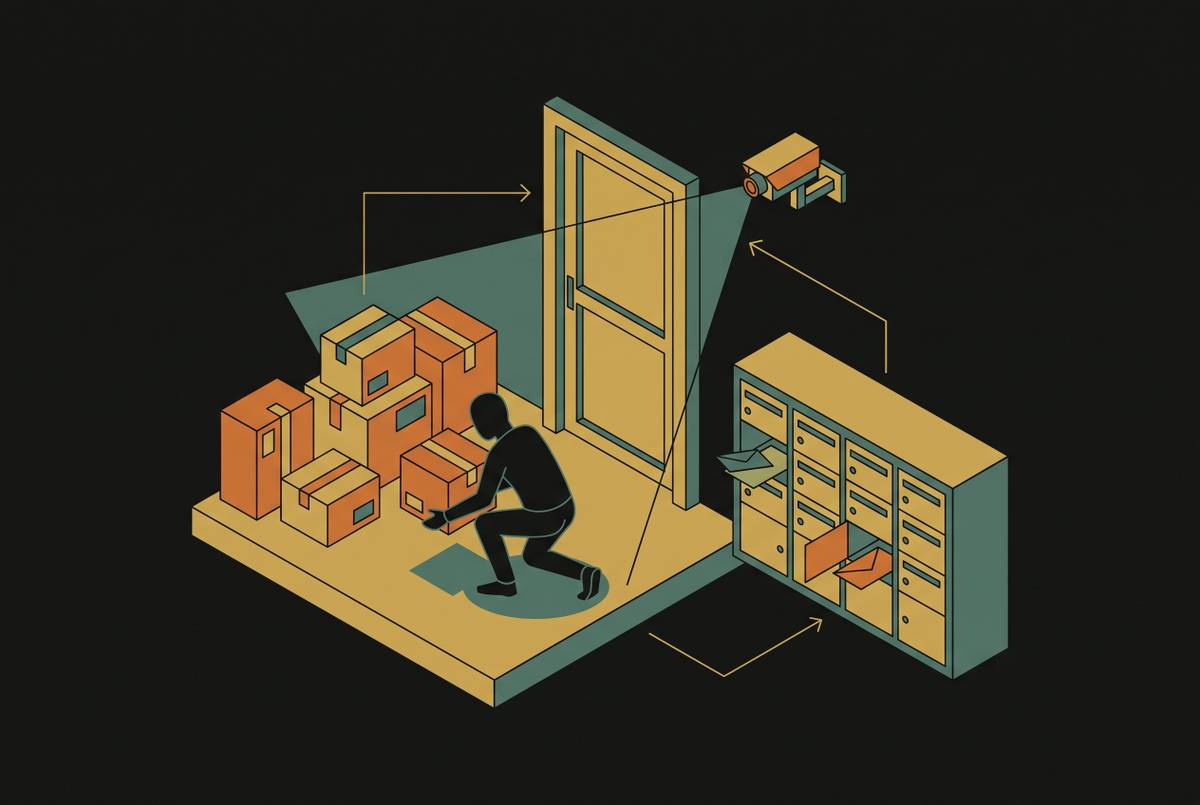
Cameras alone have not moved the needle on New Jersey's current wave either. Most of the stores hit already had security cameras installed, and those cameras have neither deterred the thieves nor helped identify them afterward. Recording a crime in progress is not the same as stopping it, and a camera system with no active monitoring behind it functions largely as a record for insurance claims and police reports rather than as a tool that changes the outcome in the moment.
The gap that actually needs closing sits earlier than most security architecture is built to address. The gap that needs closing is between the start of suspicious pre-breach activity, someone loitering, casing, staging near the entrance, and the moment anyone becomes aware that something is happening. Closing that earlier gap requires detecting the threat before the glass breaks, not building a faster response to the moment after.
What physical hardening can and cannot do
Physical hardening is a legitimate and necessary layer of retail security, and its value comes with a precise boundary: it buys time. It does not, on its own, buy safety, and the time it buys only matters if something else is positioned to use it.
Security window film is the clearest example of how that time gets purchased. Applied as a retrofit layer bonded to existing glass, the film holds shattered fragments together after an impact, so the panel does not simply collapse outward and hand a crew an immediate opening. Quality film, paired with proper adhesive and attachment systems, can extend what would otherwise be a near-instant breach into 45 to 180 seconds or more of loud, visibly obvious effort. That stretch of time and noise is often enough on its own to make a crew abandon the attempt and move to an easier target rather than continue drawing attention to a storefront that is fighting back.
The distinction between real security film and ordinary window tint matters here and is frequently misunderstood. Standard tint, whatever its cosmetic benefits, provides no meaningful delay against a deliberate strike.
That delay has a ceiling, and the Anaheim Hills case marks it clearly. The crew that hit Classic Jewelers used a vehicle to force entry, and film or glazing upgrades are not built to stop entry at that scale. Hardening raises the cost of a smash-and-grab attempt executed with hand tools. It does not neutralize a crew willing to escalate to a rammed vehicle.
Some of the most effective hardening measures cost far less than film and glazing work, and they operate earlier in the sequence, during reconnaissance rather than during the breach itself. Better exterior lighting and repositioning high-value merchandise away from the storefront glass reduce the signal a scout is looking for before a crew ever reaches the point of deciding to attack. A store that looks well-lit and keeps its most valuable inventory out of direct sightline from the sidewalk removes itself from consideration at an earlier stage than any glass upgrade can reach.
Active video monitoring fills the gap physical hardening creates
The delay window that hardening buys is only useful if something is watching closely enough to act inside it. Without active monitoring capable of detecting pre-breach behavior and triggering a response, 45 to 180 seconds of resistance simply becomes a longer, louder theft rather than a prevented one.
CHeKT's 2026 prevention guide identifies the operative insight directly: a smash-and-grab begins before the glass breaks. Loitering near the entrance, casing the storefront, a group gathering after hours, staging in the parking lot, all of it happens in a window that proactive video monitoring can actually reach, unlike the post-breach window that traditional alarms are confined to.
AI-assisted detection tools are built to catch exactly those early signals: loitering, breaches of a defined perimeter, unusual movement patterns, and groups congregating outside business hours. Filtering that behavior out from the ordinary noise of a busy sidewalk or parking lot is what lets a monitoring operator's attention land on the handful of situations that actually warrant intervention, rather than drowning in false alarms triggered by nothing more than a delivery truck or a late customer.
That is the layer physical hardening cannot supply on its own. Reinforced glass and better lighting change the conditions a crew evaluates during reconnaissance and slow down the crew that decides to strike anyway. Active monitoring is what turns the time those measures buy into an actual intervention, catching the loitering and the staging before the first piece of glass gives way, rather than reviewing the footage afterward to confirm what everyone already knows happened.
Sources
- Retail Smash and Grab Protection: Practical Ways to Harden Your Storefront in 2026
- Smash-and-Grab Robbery at N.J. Mall Jewelry Store Prompts SWAT Response
- TrackVault - Smash-and-Grab Robberies Are Rising in 2026
- Chicago businesses hit Friday in smash-and-grab burglary spree
- How to Prevent Retail Smash-and-Grab Theft: A Complete Guide
- New Jersey Jewelry Heists Surge Amid Soaring Gold Prices, No Arrests Yet - Magic 98.3 FM