Alarm Queue Depth as a Leading Indicator of Imminent Response Failure in Legacy Surveillance
Rising alarm backlog warns of missed threats before they happen.
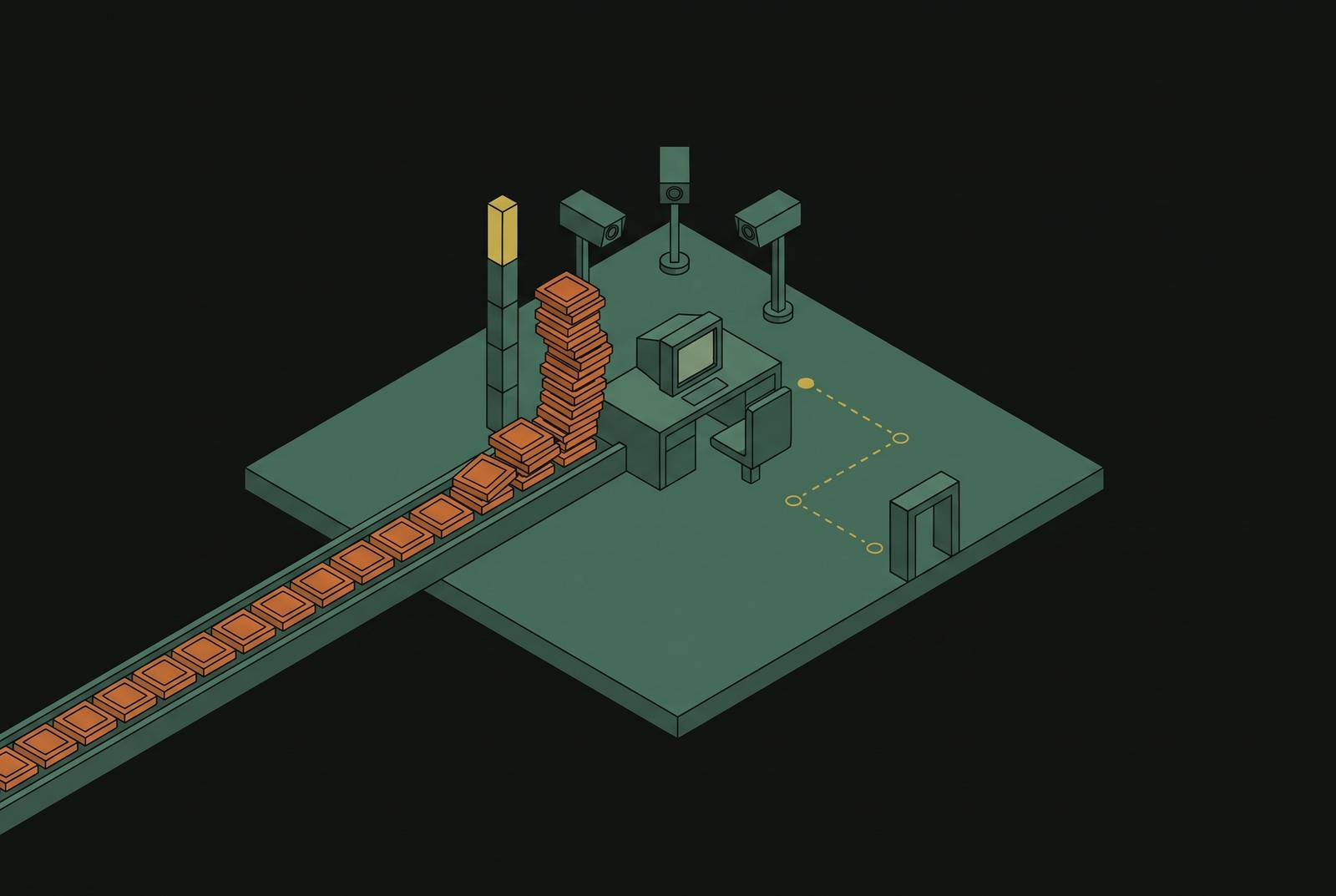
Alarm response time failure in traditional video monitoring centers begins when alerts come in faster than operators can verify them, so real threats wait behind non-actionable events. Alarm queue depth exposes that imbalance before a missed intrusion or failed SLA records its consequences. It is therefore a leading indicator of architectural failure.
What queue depth actually measures in a video monitoring operation
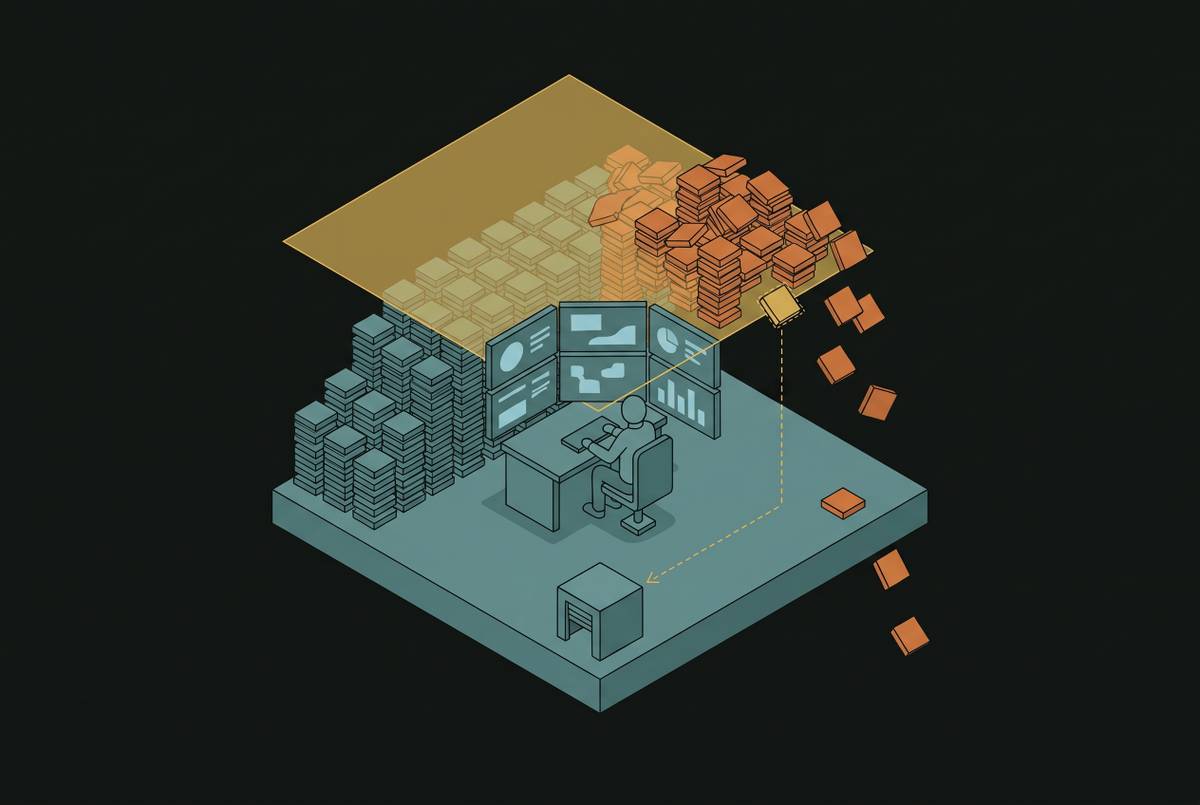
Queue depth is the count of unresolved alarm events waiting for human review at a given moment. In legacy monitoring, a camera detects motion, analytics classify an object, and an event enters an operator platform. An operator then reviews it and dispatches or dismisses it. Each stage feeds the next stage’s work. The unresolved queue reflects the gap between the inflow rate and the clearance rate.
When inflow is higher than clearance, depth grows, but when there is more capacity to clear events than arrive, the queue drains. Neither rate alone shows how well the system is working. A growing queue shows that the operation is consuming attention faster than it produces decisions, even if individual camera feeds appear routine. Software engineering treats queue depth similarly in distributed systems, where accumulated messages expose a mismatch between producers and consumers rather than automatically indicating insufficient staffing.
That distinction separates a leading indicator from a lagging one. A missed intrusion, failed SLA, or unnecessary dispatch records an outcome after it occurs. Queue depth records the conditions that can produce those outcomes while they are forming. Its value lies in that warning interval.
Why do traditional video monitoring centers fall behind on alerts?
Legacy detection creates events without reliably checking whether an operator needs to act on them. Motion detection flags activity, and basic object detection adds labels such as person or vehicle. Neither label establishes authorization, intent, or risk. A delivery driver and an intruder can therefore create equivalent review obligations, as can a resident and a trespasser.
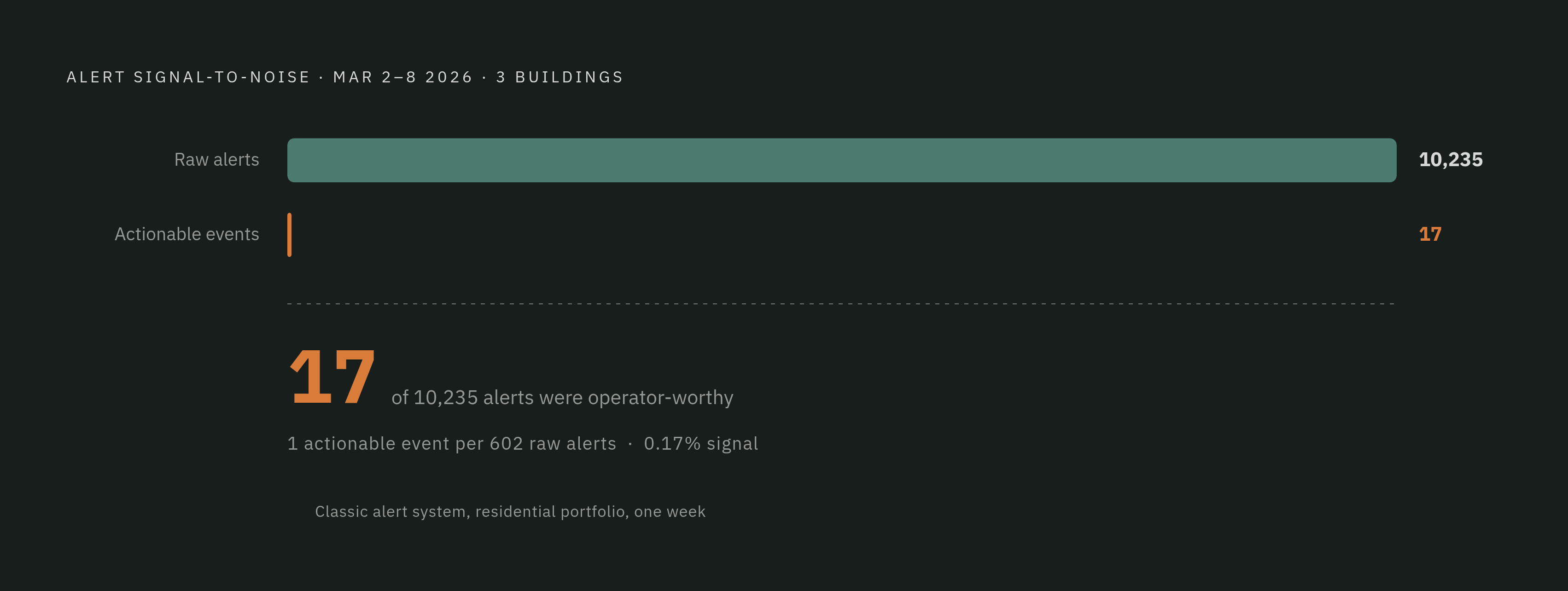
Three residential buildings studied during March 2–8, 2026, produced 10,235 raw classic alerts and 17 Important, operator-worthy events. The distinction is between detection and actionable information. Retail, parking, and logistics sites add deliveries, headlight bloom, weather artifacts, holiday lighting, IR reflections, and animals to that inflow. Adding cameras adds to the load because each camera supplies more detections without making them more useful.
The consequences extend beyond the monitoring center. Baltimore cut the number of false alarms it allows before stopping response from fifteen to five, while Seattle requires evidence to back an alarm before dispatching. Houston implements non-response after a set number of false alarms from the same address. These policies make poor alarm quality an operational and legal liability.
How queue depth accumulates and what the growth curve looks like before failure
Queue growth can accelerate because inflow and clearance are not independent. Each alert requires an operator to load the camera, interpret the scene, check site rules, assess severity, and route the event. As volume rises, context-switching slows those decisions. A larger queue can therefore reduce clearance speed, which leaves an even larger queue behind.
Fatigue further weakens the drain on that backlog. Mackworth vigilance research, replicated across decades of video-surveillance studies, establishes measurable deterioration within the first half-hour of continuous monitoring. Operators also make poorer judgments as their reviews slow down. Longer nights, weather events, delivery peaks, holiday periods, and multi-site expansion can increase inflow while the same operators are already losing review capacity.
Cost per verified event, or CPVE, makes the economic imbalance visible. It adds the total cost of operator labor to technology stack fees and divides that sum by the number of high-confidence, operator-worthy events produced in that time. Under raw-alert review assumptions, the three residential sites could consume nearly 57 modeled operator hours per week to produce 17 actionable decisions. They show how coverage can expand without a corresponding increase in useful decision throughput.
Paired with growing depth, CPVE exposes resources being absorbed by noise before the operation records a missed event. It does not establish a universal safe backlog. The tipping point depends on whether a real event can still be distinguished and acted on within its intervention window.
Why the standard workarounds fail to clear the queue
Muting noisy cameras reduces inflow by removing coverage from active monitoring. Leaving a camera's alarms unmonitored while the camera may still record can make an overloaded queue manageable. It cannot show that the coverage left is enough, because the count is lower in part because operators have stopped reviewing some events.
Moving seats offshore makes a different trade, cutting the cost of labor while signal quality stays the same. More capacity at an affordable cost can help the queue drain, but the same share of the events operators review is still non-actionable. Charging overage fees instead transfers the expense to clients. It does not remove the overflow, and repeated charges put the client relationship at risk.
These responses work at the margin without correcting detection. Vendor incentives also distribute the burden unevenly, because camera vendors sell cameras and VMS vendors sell storage and subscriptions, while monitoring operators, dispatch centers, and police departments absorb false-alarm processing costs. The human burden remains with the reviewer. Repeated false signals cause operators to downgrade urgency, so alert fatigue cannot be resolved as a training problem alone.
The point at which queue depth stops being an efficiency problem and becomes a response failure
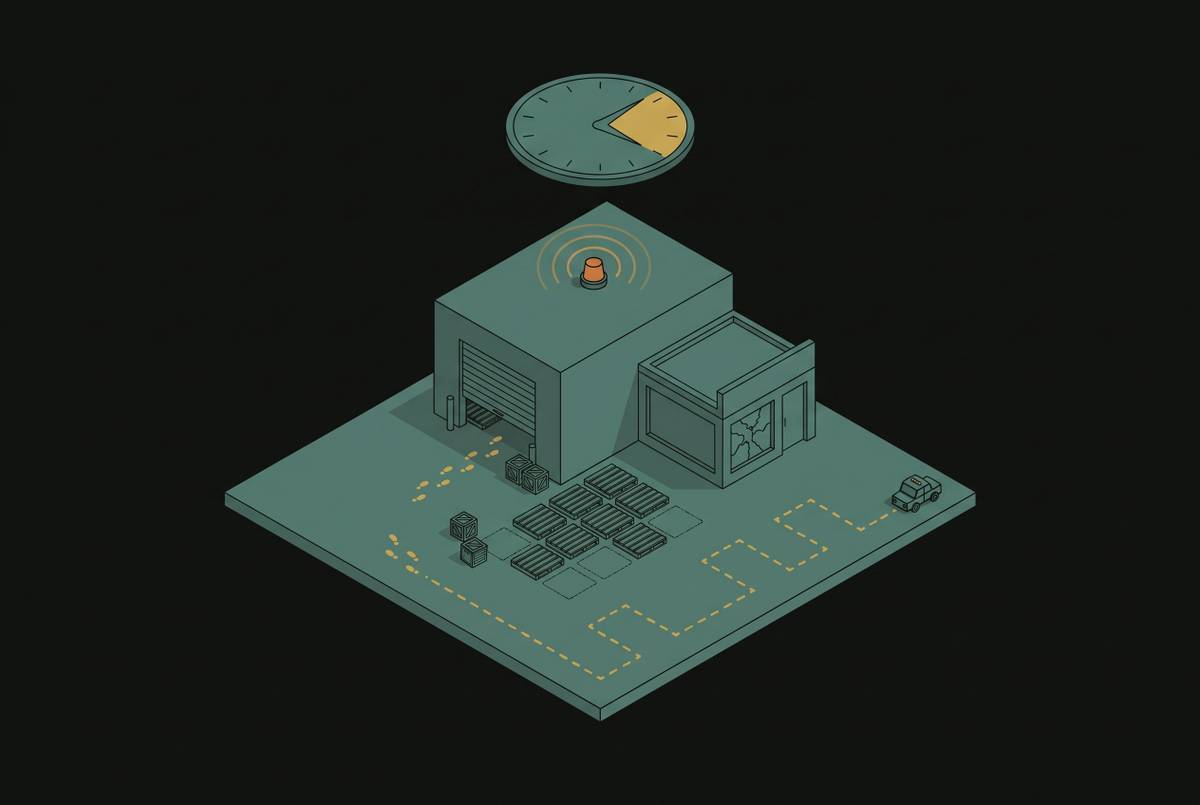
A queue becomes a response failure when a genuine threat cannot receive attention before the window for effective intervention closes. An intrusion at position 20 continues unfolding while 19 non-actionable events are cleared ahead of it. The threat does not pause for triage. Review within the intervention window can change what happens, while review after it closes helps collect evidence.
Fatigue can keep an operator from responding in time even after finally reaching the event. Healthcare alarm-fatigue research documents lengthening response times and dismissal without full investigation after repeated false signals, in settings where ICU alarms can exceed 350 per patient per day. The parallel is cognitive. A security operator who has dismissed 200 non-actionable events does not approach the 201st with fresh judgment.
A site's false-alarm history can limit police response, while evidence requirements place additional weight on the quality of verification. Chicago charges commercial premises a flat fee per false burglar alarm without a warning threshold, with residential, educational, religious, charitable, and government premises exempt. Failed response guarantees add SLA penalties, lost trust, and contract risk in Q1 renewal discussions.
Distrust can then reinforce the original exposure as operators mute cameras, raise thresholds, and accept reduced coverage. This is not adequately explained by understaffing, underfunding, or carelessness. The architecture was never designed to filter signal from noise at the volume modern camera deployments produce.
What queue depth reveals about where in the architecture the breakdown is occurring
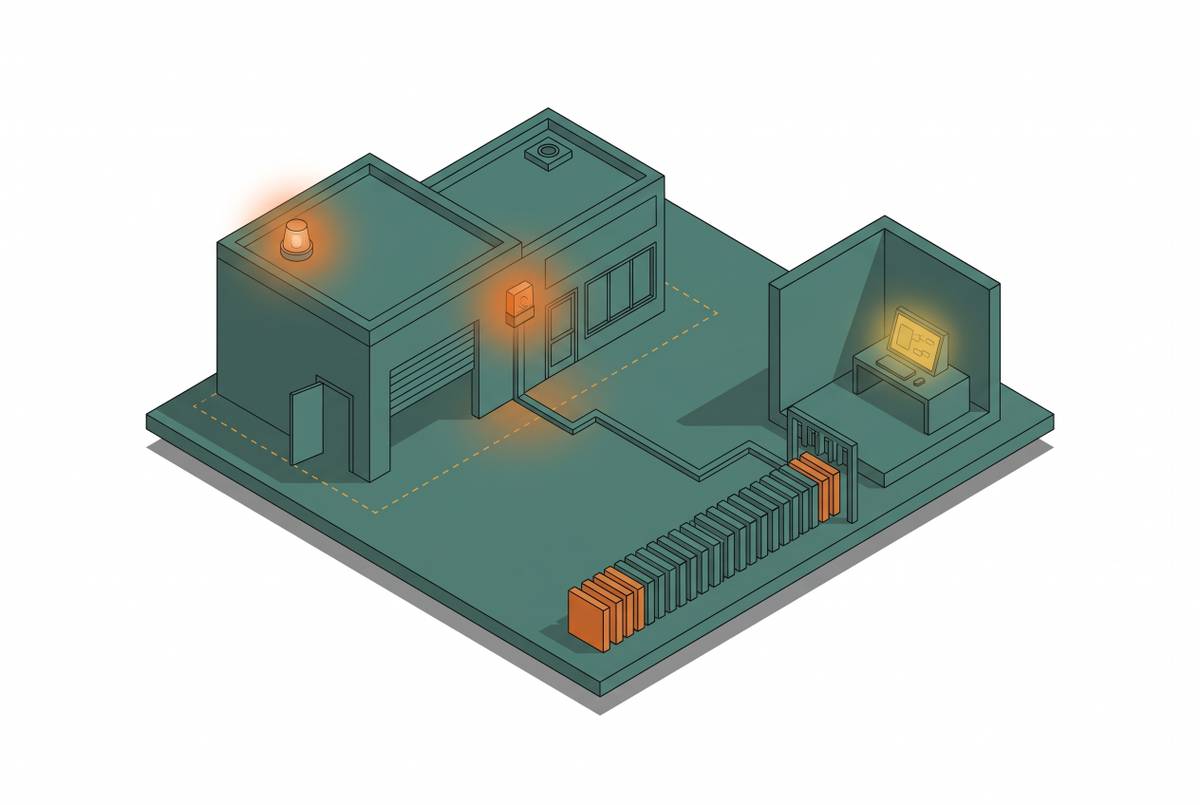
High inflow with fast, accurate triage points upstream to excessive event generation. Slow, inconsistent triage instead points toward context-switching, fatigue, or unclear escalation policy. Insufficient clearance despite good triage can indicate a staffing or workflow problem, but adding operators cannot correct the relevance of incoming events.
Queue depth per operator hour relates unresolved work to staffed capacity. Paired with CPVE, it distinguishes volume, quality, and throughput problems rather than treating every backlog as a staffing shortage. Camera-level and site-level analysis further localize the source. At one residential site, camera D05 - GF-C11 was the top contributor during the study week, illustrating how an individual inflow source becomes visible below the aggregate queue.
Footage conditions qualify that diagnosis before AI is considered. Cameras below 1080p, occluded key zones, extreme contrast, heavy backlight, and partial IR interference can lower detection confidence. Threshold adjustments then trade false-alarm rates against sensitivity. Night and IR performance is tractable, but it is not guaranteed out of the box, and a model poorly matched to footage can worsen queue quality.
AVS-01, the ANSI/TMA Alarm Validation Scoring Standard, provides a standardized framework for assessing, scoring, and relaying alarms to emergency services. It makes alarm quality externally assessable. National Monitoring Center attained certification in February 2025, among the first monitoring centers nationwide to do so. Vector Security earned UL Alarm Validation Scoring AVS-01 certification when fewer than ten alarm monitoring companies across the country had it. Adoption creates a competitive benchmark that operates alongside municipal requirements for credible verification.
How agentic AI changes the inflow/clearance equation rather than just accelerating triage
Agentic AI applies autonomous incident assessment after detection, evaluating whether activity represents a condition worth acting on and resolving routine activity before it consumes operator attention. Perception alone is insufficient for that task. A bounding box or category label still leaves the judgment to someone else.
Effective assessment applies policy logic across time and zone. Persistence establishes whether activity continued or self-resolved, authorization tests whether a person or vehicle is expected at that location and time, and context relates the event to the camera’s site-specific baseline. These distinctions change what reaches a human. Operators handle scenes that are hard to judge, high-stakes escalations, and policy edge cases, with no need to review every detected movement.
RAD's SARA agentic AI assesses activity against predefined site permissions and schedules. SARA Verify brings that approach to organizations that have no dedicated SOCs. The security team defines the rules, and AI performs verification before human action. GardaWorld’s acquisition of Stealth Monitoring in October 2024 to expand remote video analytics capabilities also reflects investment in this architectural direction.
That direction does not guarantee dependable performance at every site. Resolution, frame rate, and camera positioning constrain detection, while daytime outdoor footage at a truck yard differs from night IR footage inside a retail store. Self-checkout vision also needs tuning for each store so it can flag skip-scanning and other behaviors with enough precision to be useful. Effective deployment requires an honest assessment of low light, motion blur, weather artifacts, and site-specific edge cases, followed by threshold calibration. Otherwise, automation merely relocates the source of poor-quality events.
Using queue depth as a continuous diagnostic instrument, not a one-time audit
Queue depth per operator hour and CPVE should be interpreted together, with camera-level and site-level contributions used to locate disproportionate inflow. Direction is more informative than a snapshot. Two queues at the same depth represent different conditions if one is stable and the other is accelerating.
Checking how the seasons affect that distinction can help before the queue is overloaded. Longer nights, weather changes, delivery peaks, and holiday periods are predictable sources of additional events. Tracking how they affect queue growth shows whether the architecture can cope as conditions change. A one-time measurement cannot show that relationship.
External requirements also change what an operation must demonstrate. Low CPVE, fast verified-event throughput, and scoring that follows the standards help make a service one clients can trust in markets where unverified alarms bring dispatch risk and financial liability. Conversely, non-response policies reduce service value while overage fees weaken client relationships and fatigue increases operator turnover. Queue control is becoming a condition of operational credibility.
Managed continuously, depth exposes structural breakdown before it appears as a missed event, failed SLA, or lost contract. That is the distinction between warning and retrospective accounting. An architecture that cannot control its queue was designed for camera counts and alarm volumes an order of magnitude lower than those it must now process.